
Council approves contested San Pedro Navy property reuse plan after heated debate
Get AI-powered insights, summaries, and transcripts
Sign Up Free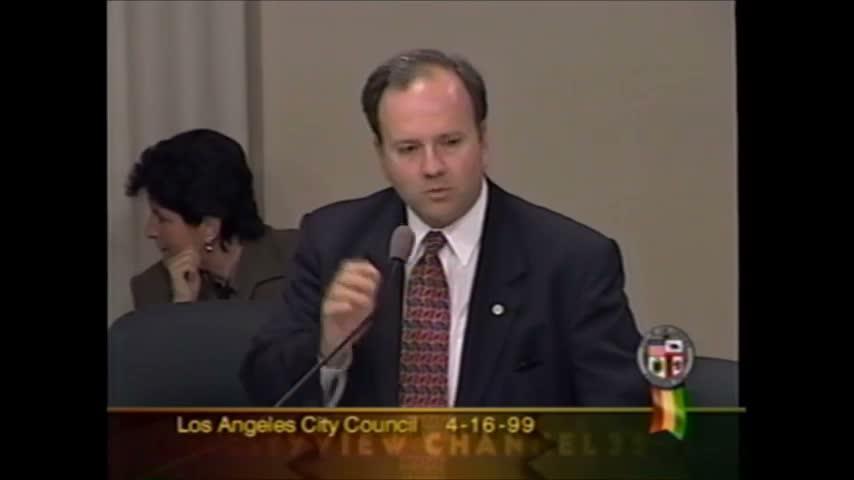
Summary
After hours of debate, the Los Angeles City Council approved a reuse plan for surplus Navy housing in San Pedro, adopting a committee-backed option over competing preservation-focused amendments. The vote followed arguments about preserving existing housing, affordable-homeownership via 'sweat equity,' and HUD conveyance rules.
Los Angeles — The City Council on April 16 voted to adopt a reuse plan for surplus Navy housing in San Pedro after a lengthy and divided debate over how many units to preserve, who should operate them, and whether parts of the site should be transferred to private educational institutions.
Councilmember Rudy Savornich, chairing the housing discussion, pressed the committee-backed recommendation and urged the council to accept a compromise crafted by neighborhood stakeholders. “What we have before us is the reuse plan as submitted by the reuse committee,” Savornich said, asking colleagues to recognize months of local work. Opponents, led by Councilmember Sekowsky, moved a substitute (23a) that would have prioritized preservation and reallocation of units for sweat-equity homeownership.
Why it matters: The parcels at issue were declared surplus after the Long Beach Naval Shipyard closure. The decision affects several hundred housing units, the mix of transitional and permanent housing, and how federal conveyance rules and local agencies will be used to meet affordable‑housing goals in the region.
Details of the dispute: Sekowsky’s substitute motion aimed to preserve up to 303 units and allocate 100 units specifically to Habitat for Humanity (sweat-equity homeownership) while reserving 56 units for New Directions (veterans’ transitional housing) and limiting demolition tied to a proposed Research and Education Institute to 68 units. She argued the housing stock was sound and that demolition would be “a tragedy.” Savornich and supporters emphasized the reuse committee’s multiweek, community-driven process and the need to balance housing, economic development and other land‑use goals.
Legal and funding context: City planning staff and the city attorney reported that HUD had issued guidance showing no blanket authority for discounted conveyance of federal property for affordable housing in general, but that transfers under Public Law 105‑50 (conveyance for self‑help housing at a possible 75% reduction from fair market value) may be available and that HUD is preparing implementing regulations. Planning staff also reported a proposed monetary contribution from certain education uses to LAHSA of approximately $2,200,000 to support homeless housing.
Votes and outcome: Multiple substitute motions and amendments were considered at the dais. A Goldberg–Hernandez amendment to require that preserved units remain affordable “in perpetuity or at least 55 years” failed. Another procedural motion failed earlier. The transcript records the final prevailing roll call on the main motion as "10 ayes, 2 no's," after which the chair declared the motion approved. The council directed staff to implement the council‑adopted configuration and to continue consultations with HUD and the Navy on conveyance details.
What comes next: The adopted reuse plan must be finalized with the Navy (Department of Defense) and coordinated with HUD for any special conveyance terms; LAHSA and city housing agencies were identified as key implementers for homeless and affordable housing components. Councilmembers who opposed aspects of the final action said they planned to press for future refinements and for protection of affordable units in perpetuity where possible.
Council statements: Sekowsky said, “If we do not look at preserving as many of these housing units as possible, we are condemning very viable housing to the path of the bulldozer.” Savornich urged respect for the reuse committee’s work and for taking a step forward after lengthy public deliberations. Goldberg pressed for stronger affordability terms and to avoid re‑competing awards already made to local providers.
The council moved on to other business after the vote; Navy approval and HUD regulatory guidance remain necessary steps before any transfers or demolition occur.