
GIPS lays out 3-phase facilities plan; Gates Elementary is top priority for phase 1
Get AI-powered insights, summaries, and transcripts
Subscribe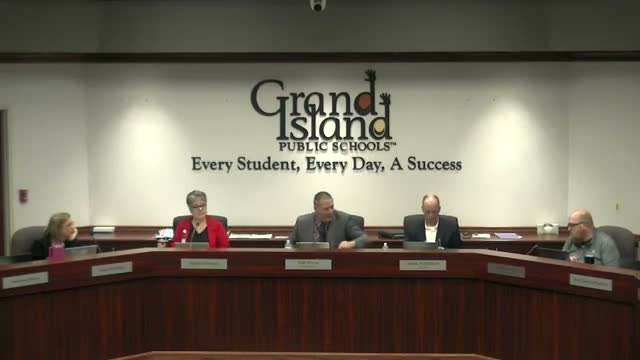
Summary
Superintendent Matt Fisher presented a long-range facilities plan that prioritizes a Gates Elementary refresh as phase 1 (estimated ~$5.7M) and sequences Westridge and Walnut work in later phases; the board discussed funding from the building fund, levy adjustments and possible short-term tax anticipation notes (TANs).
The Grand Island Public Schools held a lengthy discussion Feb. 12 about a tentative three-phase facilities plan intended to guide capital work over the next 5–50 years.
Superintendent Matt Fisher and district staff presented the plan developed at a recent board retreat. The board framed the proposal as a long-range strategy—Phase 1 would focus on projects that could be done with existing building fund dollars rather than a bond. The top Phase 1 priority is Gates Elementary, where staff proposed completing previously delayed work to add a cafeteria, provide a more secure office/vestibule, and refresh finishes and systems. District staff estimated a Gates refresh at about $5.7 million and said such a refresh could extend the building’s useful life by roughly 20–30 years.
Phase 1 also would include classroom additions at Westridge Middle School to raise capacity toward an 800-student model (cost estimate: $12+ million for classrooms and cafeteria expansion) and a second gym at Walnut Middle School. The board estimated Phase 1 projects could total roughly $22 million.
Funding and timeline: Staff said the district’s building-fund balance was about $2.5 million and noted the prior budget year included a 14¢ levy added to the building fund that would generate roughly $7 million over the next year. With an assumed 6¢ ongoing building fund levy yielding about $3 million annually, staff projected reaching ~$24 million over several years to fund Phase 1 without borrowing. The presentation said architects indicated the Gates project could begin as early as fall 2026; the board discussed proceeding quickly to avoid rising construction costs and using short-term tax anticipation notes (TANs) if needed to accelerate work.
Longer-range discussion: Phase 2 planning would explore adding a second gym and expanded fine-arts space at Westridge and additional high-school work (initial estimate for some high-school needs: $15 million). Phase 3 discussed planning 15–20 years out, including potential new elementary(s) and a second high school; staff noted that costs over that horizon could be substantially higher and recommended continued public input before moving forward with bonds.
Board direction: The board requested further public input and asked staff to bring the Gates project forward as an action item for the March meeting. Several members stressed mental-health and counseling space at the high school as a possible earlier priority and emphasized careful stewardship of taxpayer dollars.
Why it matters: The plan identifies near-term projects that district leaders say can be funded from reserves and modest levy shifts without immediate bond elections, while laying out a structural approach to address enrollment growth and aging facilities over decades.