
CCSD outlines Career Prep redesign as graduation rates climb; special‑education pathways shift under new law
Get AI-powered insights, summaries, and transcripts
Subscribe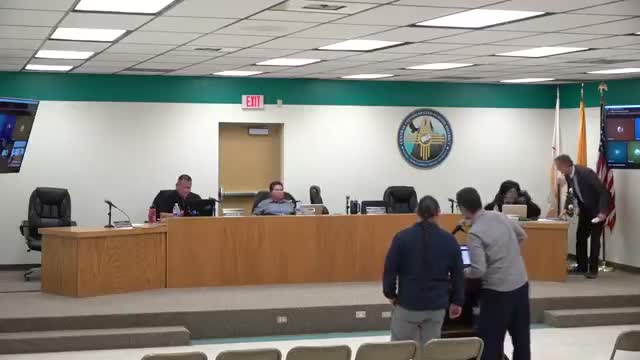
Summary
Board heard Career Prep’s local restructuring plan to bring CTE and hands‑on instruction back to the school; the district also reported rising graduation rates and explained state changes to special‑education graduation pathways under House Bill 171.
Central Consolidated School District leaders told the board on Feb. 19 that Career Prep High School will pursue a locally driven restructuring that emphasizes career and technical education (CTE) and hands‑on instruction as part of a multi-step plan to exit MRI status.
Brian Paniagua, Career Prep’s lead, described the redesign as a return to the school’s namesake mission: "We would like to bring CTE into the school and kind of use the momentum that we're already building this year," he said. The district said it is working with the Public Education Department’s Priority Schools Bureau and an external coach; the local board will review a written plan next month before submission to PED for formal approval.
Separately, district staff presented 2025 graduation rates by school: Career Prep 46.63% (biggest recent gains but below the state threshold for exiting CSI/MRI), Newcomb High 87.42%, Shiprock High 77.46% and a district average of 82.24% compared with New Mexico’s 80.47%. Presenters credited targeted interventions, 90‑day plans, and principal-level accountability for multi-year improvements.
The board also heard a detailed special-education presentation. Staff summarized the three traditional graduation pathways for students with disabilities (standard, modified and ability) and explained that House Bill 171 (signed by the governor) changes the pathways for cohorts entering ninth grade in 2025–26; those incoming cohorts will follow two pathways while prior cohorts retain earlier options. Special-education staff emphasized that IEP teams must develop transition plans (beginning at age 14) and that parents and students must be engaged in pathway decisions.
Board members asked about local control, how PED reviews fit into the timeline, and staff roles should plan A not meet state standards. District leaders said they are aligning the Career Prep proposal with Navigate/Priority Schools Bureau expectations and are preparing for robust local oversight to avoid state takeover options such as a restart or closure.
Next steps: Career Prep will present a formal plan at the board’s next work session for board approval and subsequent PED review.