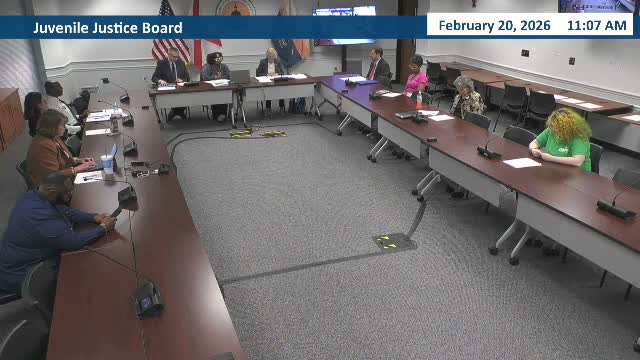
Founder of Florida Recovery Schools tells Circuit 13 board her program reduced overdoses and invites professional training
Loading...
Summary
Tina Miller, founder of Florida Recovery Schools of Tampa Bay, presented program outcomes to the Circuit 13 board, described three local recovery high schools and invited stakeholders to a free March 7 training in Clearwater; she requested community support (transportation, referrals) for students.
Tina Miller, founder and executive director of Florida Recovery Schools of Tampa Bay, told the Circuit 13 Advisory Board that her nonprofit operates three recovery high schools in the Tampa Bay region and described the program’s model and reported outcomes.
Miller said her schools are free to students, provide mental‑health counseling and recovery supports, and use experiential approaches such as equine therapy and outdoor activities. She told the board that, according to an update from her operations manager, incoming students had experienced overdoses and suicide attempts prior to enrollment, and that the schools’ internal tracking shows zero overdoses and zero suicide attempts while students are enrolled.
“Since attending our schools, average amount is 139 days, 0 suicide attempts, 0 overdoses,” Miller said during her presentation, and she described multiple student success stories of graduation, job placement and college acceptance. Miller also said the schools accept Step Up For Students scholarships and that she has pursued grant funding to keep the schools free.
Miller invited juvenile-justice workers, law enforcement, mental-health providers, parents and educators to a free community training on March 7 from 10 a.m. to 1 p.m. at Nova Southeastern University in Clearwater, offering lunch and program information.
Board members praised the program’s peer‑recovery approach and noted county support available through opioid-response funding. Parkinson referenced county opioid-response dollars that were allocated for juvenile programming; the transcript records an approximate settlement allocation and general funding support but does not provide a precise settlement figure in the meeting record.
Miller said the schools serve students ages 14–19 and that anyone can refer a student through the program website. She acknowledged transportation remains a challenge for some students and asked for community assistance with transportation or donations to help students attend the schools.