
Ross Local board: new state laws could cut $1.2 million from district revenue next year
Get AI-powered insights, summaries, and transcripts
Subscribe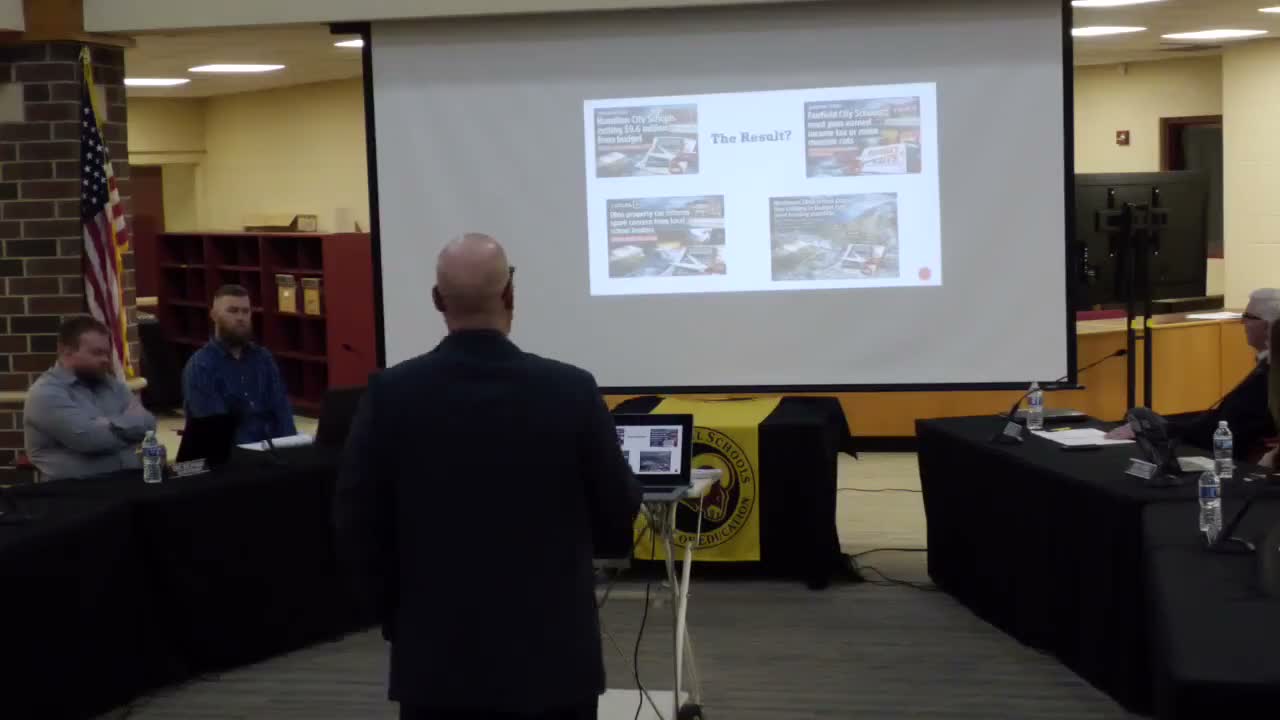
Summary
The Ross Local School District treasurer told the board the district expects a net loss of about $1.2 million in FY27 because of recently signed state property-tax changes, and warned losses could grow; a community town hall with state officials is set for March 19.
Ross Local School District officials warned the board on Feb. 19 that recent state property-tax legislation and changes to school funding could shrink the district’s revenue and push the district into earlier deficit spending.
Treasurer (presented at the Feb. 19 board meeting) told the board the combination of the governor’s biennial budget failing to complete the Fair School Funding phase-in and several December property-tax bills will limit future growth on reappraisals and include a clawback of money districts previously received. He said the district projects a net loss of about $1,200,000 in fiscal year 2027 after a one-time hold-harmless payment, and cautioned the district could lose an additional roughly $2 million in later years if the laws remain unchanged.
"They're pulling 3.2, 3.1, giving us back 1.9…So a net loss for us of, of $1,200,000," the treasurer said when walking the board through the forecast slides.
The presentation detailed three bills identified by the treasurer as principal drivers of the change: House Bill 186 (limits growth from reappraisals and contains a backward-looking clawback provision), House Bill 335 (limits inside millage growth), and House Bill 96 (the "piggyback" homestead/owner-occupied credit). The treasurer included the piggyback cost in the near-term numbers — about $202,000 this year and $202,000 next year — and showed forecast slides in which property-tax collections fall from roughly $10.2 million to about $7.6 million under the new rules.
Board members and administrators said some cost-saving measures are already built into the forecast, including three reduced administrative positions through attrition, renegotiated utility contracts and other efficiencies. The treasurer said those savings were included in his projections but would not fully offset the declines in revenue.
Another board member criticized the state's choices. "Ohio ended fiscal year 25 with a surplus of $1,300,000,000," that member said, and added: "So this idea that they can't afford to fund public education is a bold faced lie." The comment underscored the board’s message that the issue is not unique to Ross but affects many districts in Ohio.
The board scheduled a community town hall for 6:00 p.m. on Thursday, March 19 (after the 5:00 p.m. board meeting) and invited state officials — including Senator George Lang and Representatives Hall, Mullins and Gross — as well as Butler County Auditor Nancy Nix and Treasurer Mike McNamara, so residents can ask questions directly about the legislation and its local impact.
The treasurer said the board will file the required three-year forecast by the Feb. 28 deadline and then plan an update in May after spring property-tax settlement data and further details on legislative impacts are available. He emphasized the February filing is a snapshot based on current assumptions and will be revised once more accurate data arrive.
Next steps: the board approved the treasurer’s recommendations (including filing the February forecast) during the meeting and will review updated projections at the May forecast update once spring settlement numbers are available.