
Business owners urge faster restaurant and commercial permitting; staff outlines constraints and possible fast‑track
Get AI-powered insights, summaries, and transcripts
Subscribe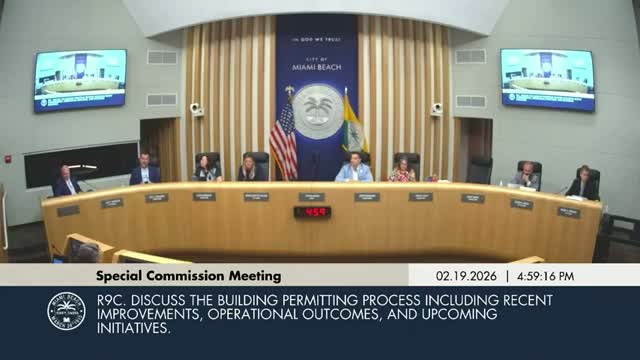
Summary
Owners and landlords told commissioners long permitting times harm leases and deter investment; staff pointed to county approvals and grease/FOG rules as constraints but said concurrent review and a restaurant‑specific approach merit study.
Business owners, landlords and industry representatives told the Miami Beach commission that permitting delays are costing deals and deterring investment, and several asked the city to create a restaurant‑specific fast‑track.
Attorney and nightlife task‑force chair Steven Polisar said investors often choose other municipalities because of Miami Beach’s permitting reputation. "I get people in my office... they say, I don't want to get involved with the city of Miami Beach," Polisar said, and urged a joint private‑public working group to streamline reviews for commercial openings.
Public commenters including landlords and restaurateurs recounted experiences that took months; one speaker said a new restaurant project required six to seven months of permitting work. Many said walk‑throughs, currently limited to interior commercial renovations under 2,500 square feet, do not cover typical restaurant projects and asked staff to reconsider thresholds or create a restaurant program that bundles common approvals.
Assistant City Manager and building staff explained that some restaurant requirements—such as grease, oil and FOG controls and certain county (Durham) approvals—are legal prerequisites that must be satisfied. The building official said the city can perform concurrent reviews with Durham in some cases to shorten elapsed time, and that staff has already modified the BTR/reactivation process to avoid unnecessary reviews when a use has not changed.
"There are pertinent law rules specifically for restaurants... the FOG (fat, oil, grease) program is what really makes it an arduous process for a restaurant," a staff official said. Commissioners asked staff to explore whether a restaurant‑focused pathway or expanded walk‑through criteria could be designed without compromising required county or safety approvals.
Staff also emphasized that many permits are delayed by incomplete submittals and incorrect contact information; they plan IT checks and possible owner‑contact verification so property owners receive automated notices. CIO Frank Incanna said verification is not currently configured but he would investigate triggers for verification emails. The commission encouraged further collaboration between city staff and private‑sector stakeholders to test reforms and improve the city’s permitting reputation.
The administration did not adopt a formal fast‑track at the meeting but agreed to study options and report back as part of the implementation plan requested elsewhere on the permitting agenda.