
Miami Beach commission directs administration to add mid‑review outreach, aims to halve long permitting reviews
Get AI-powered insights, summaries, and transcripts
Subscribe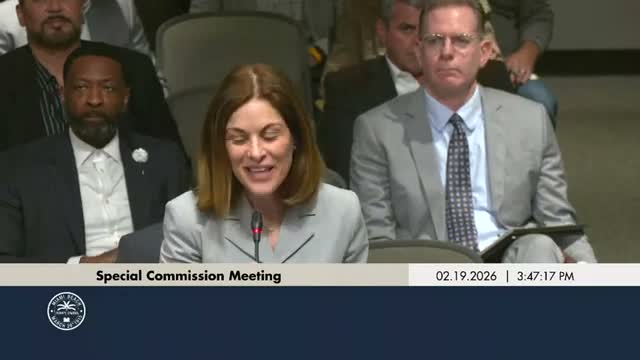
Summary
After a staff presentation on permitting improvements and metrics, commissioners voted to direct administration to implement proactive mid‑review communication (a 24‑hour 'cure' window for simple fixes) and set a six‑month goal to cut permits stuck in four‑plus review cycles by half.
Miami Beach commissioners on Tuesday pressed city staff to reduce delays in the permitting process and directed the administration to implement mid‑review outreach that could prevent applications from being kicked back into a new queue.
City Manager Eric introduced a presentation by Maria Hernandez, who told the commission the city issued about 12,200 permits in fiscal year 2025 and handles roughly 2,300 submittals a month. Hernandez said 68% of reviews are completed in two cycles or less and 84% when three cycles are included, but roughly 1,900 permits remain in a four‑plus review category that she called “unacceptable.” She said staff has cut roughly 40% of permit types through consolidation, launched walk‑throughs and over‑the‑counter permits, and is testing tools such as the Decision Engine/City Services Concierge and AI to reduce incomplete submittals.
“The walk‑through and the decision engine have moved the needle,” Hernandez said. “We reduced permit types, retrained staff and launched over‑the‑counter permits so simple jobs get handled quickly.”
Commissioners focused on applicants receiving a failure notice late in the review cycle — often after weeks in the queue — which forces them to start a new cycle. Multiple commissioners asked whether staff could pick up the phone or send a documented notice earlier, giving applicants 24–48 hours to supply a missing affidavit or corrected signature rather than triggering a full resubmittal.
Building staff and the city manager told the commission that the current permitting system marks incomplete filings and sends email notifications to all contacts, but that incomplete or incorrect contact information and staffing vacancies sometimes prevent timely follow‑up. The building official said the system “stops” an incomplete application until the applicant reuploads corrected documents.
Commissioners moved to direct the administration to implement proactive mid‑review communication and a short cure period for straightforward fixes, and to return with an implementation plan and a quarterly update. They also set a separate target for the administration: reduce the share of permits in the four‑plus review category by half within six months and provide a progress report after three months. Both directions were taken by second or acclimation.
Public commenters, including hospitality and property owners, urged faster permitting and recommended a restaurant‑specific fast‑track because restaurant projects often require special grease/FOG and county (Durham) approvals that lengthen review times. Staff noted some concurrent review is possible but county approvals are a legal prerequisite in specific cases.
The administration also noted several near‑term tools to improve throughput: expanding walk‑throughs, increasing over‑the‑counter permits, launching a 24‑hour electronic permit option for simple tasks, continuing a design‑professional review day for larger projects, and an RFQ for AI tools that closes March 6. Staff said an inspection text‑notification system is slated for rollout in March so applicants can receive opt‑in messages when inspectors are en route.
The commission asked for a concrete implementation timeline and periodic metrics updates to track the promised reductions in long review cases. The meeting ended with a directive to return with the requested implementation details and a quarter‑one progress report.