
Board hears options to raise student-activity fees; staff project $40K'$47K additional revenue
Get AI-powered insights, summaries, and transcripts
Sign Up Free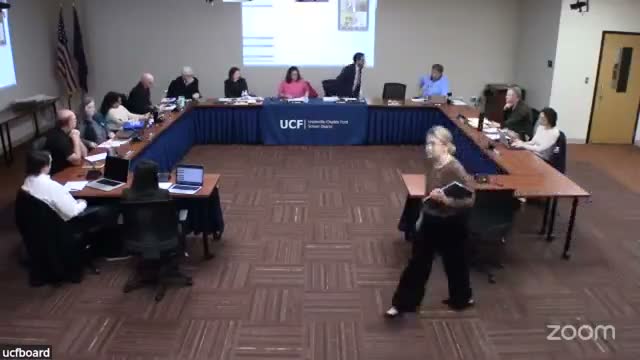
Summary
District staff reviewed current student-activity spending (~$2.7M combined with athletics) and proposed raising activity fees (sample options would raise elementary fees from $12 to $25 or $30), estimating roughly $40,000'$47,000 in added revenue; board debated equity, family caps and hardship waivers.
Mr. Clark presented a comprehensive review of student activities, describing the district's current activity spending (combined activities and athletics approximately $2.7 million) and current fee structure (many elementary activities at $12; some high-school activities higher). Clark summarized prior changes to the activity-fee model (initial adoption in 2013, adjustments in 2023 and performing-arts changes in 2025) and compared local-district fee examples.
Staff offered two sample fee packages: a moderate option (elementary $25, middle $30, high school $35) and a higher option (elementary $30, middle $35, high school $40). Using current participation estimates, staff projected those changes could generate approximately $40,000'$47,000 in additional revenue to support program costs, supplementals and possible program expansion.
Board members discussed participation effects, internal equity across activities that currently have no fee (student government, Best Buddies, yearbook) and the importance of a clear, accessible hardship waiver or fee-waiver process. Several members advocated for a family cap (district currently uses a 300 individual / 600 family cap metric) and for exploring grants or private sponsorship as alternatives to increasing fees.
Administration emphasized a tiered review cycle (every 3'4 years) and noted that changes to supplemental pay or formal contract terms would involve the bargaining process. No formal vote was taken; staff will gather additional data and return with recommendations in March.