Get Full Government Meeting Transcripts, Videos, & Alerts Forever!
Get email alerts on the Middle School Project topic
No spam. Unsubscribe anytime.
Unionville-Chadds Ford Superintendent recommends delaying middle school construction after schematic design raises site costs
Summary
After schematic design and third‑party cost estimates showed higher site and demolition costs, the superintendent recommended completing design work but shifting construction from 2027 to 2031 to protect the district’s fiscal position and take advantage of a projected debt‑service drop.
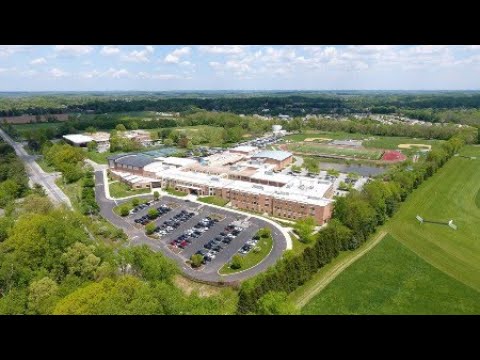
Unionville-Chadds Ford School District Superintendent Dr. Hoffman on Jan. 12 presented results of the district’s schematic-design phase for a proposed new middle school, saying the design closely matches educational needs but that updated cost estimates—driven largely by site work and demolition—exceed the district’s earlier feasibility study budget.
“The first estimate we got back from our construction estimator looked like this. Total of almost 148 million,” Dr. Hoffman said, summarizing the third‑party estimate that the district said exceeded the original feasibility baseline of $120 million. He and the architect team said the largest drivers were site work, demolition and escalation costs, particularly the stormwater and grading work needed to build on a 40‑acre footprint with significant grade change.
Design lead Mr. Weitzel walked the board through the schematic plans, including a two‑story academic layout, separated large‑group spaces for community use, and one‑for‑one replacement of three athletic fields. He said the schematic phase refined the program from the feasibility study into specific floor plans and site layouts.
District presentations and the construction estimator’s review prompted immediate value‑engineering work. Officials said they reduced some circulation and hallway space, selected alternative construction materials and identified bid alternates to bring costs down without changing the educational program.
Given the remaining budget gap, Dr. Hoffman recommended completing design work with Breslin Architects but adjusting the construction start: “we would recommend completing this design process with Breslin, but adjust our overall project timeline that reflects the start of building construction in 2031 as opposed to the current timeline … starting construction in 2027.” He said the later start would give the district room in its operating budget when debt from the high‑school renovation drops off and could produce more favorable financing terms.
Board members pressed presenters on why schematic costs were higher than feasibility numbers. Mr. Weitzel and Breslin representative Mike Bell said the feasibility phase did not include detailed topographic surveys, preliminary grading or detailed stormwater calculations; the schematic design revealed a 25‑foot grade change on portions of the site and larger amounts of environmental remediation and demolition than were accounted for in the high‑level study.
On contingency, district presenters said they were carrying both a design contingency (approximately $6 million) and a construction contingency (about $4 million), and that the combined contingency would be refined as the design advances. “The contingency is a little conservative. We could certainly fine tune that,” Mr. Weitzel said.
During public comment, resident Lauren Chardonnay urged careful cost review and asked whether retrofit alternatives had been fully exhausted before pursuing a new building: “Is there any other alternatives, whether sites or feasibility on the existing building and show the citizen that there's been some real homework on trying to retrofit the existing building.” Officials pointed to the feasibility study and said they would continue to share analysis and options at the March work session.
The administration said it will return to the board in March with more detailed budget projections, options to move certain site work ahead of building construction and a recommended schedule for issuing debt. No formal vote on construction or financing occurred at the Jan. 12 work session; the board plans further deliberation at future meetings.
What’s next: the district will finish design refinements, expect a March update on a revised timeline and budget options, and continue targeted value engineering ahead of any formal financing request to voters or bond markets.