Lifetime Citizen Portal Access — AI Briefings, Alerts & Unlimited Follows
Subcommittee advances Cynthia Smith Crick’s nomination for 13th Circuit solicitor
Loading...
Summary
A judiciary subcommittee voted to forward Cynthia Smith Crick’s nomination to the full judiciary committee after she described her prosecutorial philosophy, office staffing plans and resource needs to manage heavy dockets.
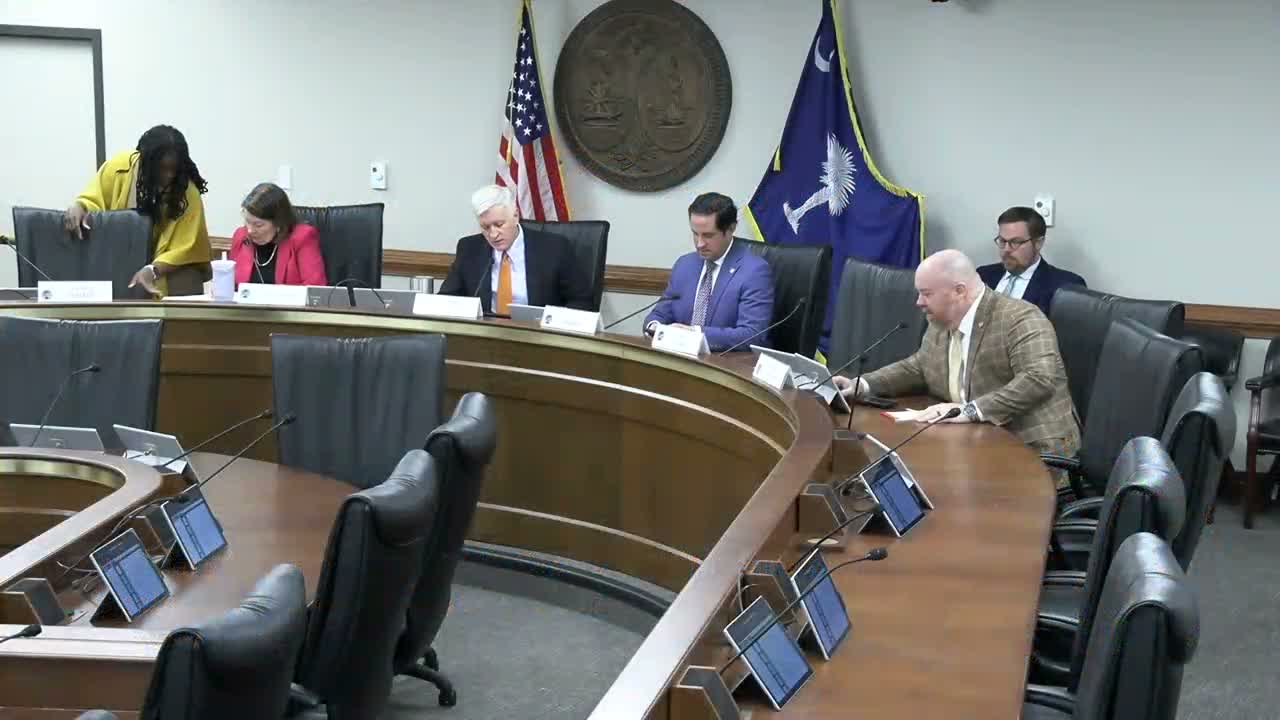
Cynthia Smith Crick, a Greenville County attorney nominated by the governor to serve as circuit solicitor for the 13th Judicial Circuit, appeared before a legislative judiciary subcommittee on a motion that the panel later advanced to the full judiciary committee.
Crick introduced herself to the subcommittee as “Cynthia Smith Crick, and I'm in Greenville County,” and said she intends to run for the solicitor’s seat in the upcoming general election. She described a career that began at a domestic violence shelter and led to prosecution work in the Seventh Circuit, including running a Violence Against Women unit and prosecuting serious cases, and later serving as chief of staff to U.S. Representative Trey Gowdy.
The subcommittee pressed Crick on how she would balance public pressure and conviction-rate expectations against ethical obligations. "We are ministers of justice," Crick said, arguing that prosecutors must serve victims and defendants and apply the law to facts so that "consequences that fit the crime" are imposed. She said the office must be "fair and just" and that ethical duties require dismissing cases that lack probable cause.
Members asked about changes she has made since taking charge of the solicitor’s office. Crick said she stepped into what she called the state's largest solicitor office — with roughly 140 employees and about 60 attorneys — and focused first on morale, rehiring experienced prosecutors and expanding training so new staff can manage large dockets more effectively. She described prosecutors in the office carrying "about 200, sometimes more" defendants on their dockets, and said some staff had "700 warrants on their dockets," which she identified as a driver of backlog.
Crick identified manpower and funding as the primary resource gaps. Asked what the state should provide, she replied that hiring more prosecutors to spread caseloads and fundingsupport for new duties — for example, expanded DUI prosecution in magistrate courts — would be essential to reduce multi-year backlogs.
On juvenile justice, Crick described recent steps to hire three prosecutors for the family court unit, open a deflection program at an alternative school, and launch a juvenile treatment court aimed at addressing root causes and involving parents. She also said the office supports specialized dockets, including veterans, mental-health and drug courts, and is exploring a countywide homeless court.
Crick told the panel the office works closely with local law enforcement and a multi-agency drug enforcement unit that coordinates sheriffs' and municipal police departments. She said the office’s general counsel, identified only as "Kyle" in testimony, oversees asset forfeiture work and coordinates with the drug unit; Crick added that he "probably brings in more money than anyone else in the county." That comment was presented as her assessment and was not independently verified at the hearing.
When asked whether she would decline to pursue a case lacking sufficient evidence despite public outcry, Crick said she would. "If we have reason to believe that the person did not commit the crime...we have ethical obligations to present that evidence," she said, adding the office has dismissed cases when the evidence did not meet legal standards.
After questioning, a committee member moved that the subcommittee give a favorable recommendation to advance Crick’s nomination to the full judiciary committee. The motion was seconded; the panel called a voice vote and members answered "Aye." The chair noted a proxy for another senator and adjourned the meeting. The full judiciary committee meeting date was not set at the hearing.
The subcommittee’s action was procedural: it forwarded the governor’s nominee to the next committee for further consideration rather than confirming her to the position. The full judiciary committee will consider the nomination at a later date.