Get Full Government Meeting Transcripts, Videos, & Alerts Forever!
Get email alerts on the Distillery License topic
No spam. Unsubscribe anytime.
Distillers urge limited Sunday sales, expanded tours under H 5017
Summary
Craft distillery representatives told the subcommittee H 5017 would let micro‑distilleries sell limited bottles and align tour hours with weekend tourism; lawmakers questioned whether incremental changes could erode the three‑tier system.
Owners and trade representatives from South Carolina’s craft distilling industry urged the General Law Subcommittee to back House Bill 5017, a measure to adjust retail liquor licensing for micro‑distilleries.
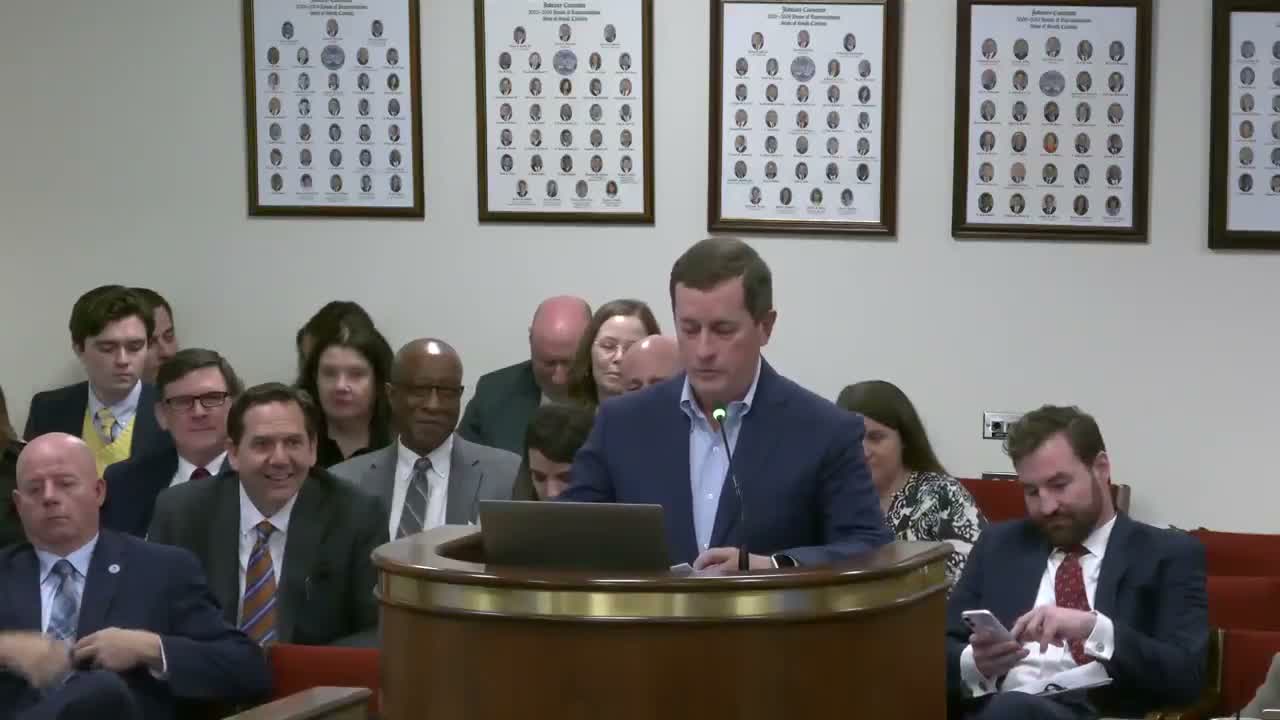
Chris Crowe, president of Burnt Church Distillery and vice president of the South Carolina Craft Distillers Guild, said there are currently 34 licensed micro‑distilleries in the state that supply local agriculture and tourism. He described Sunday demand from out‑of‑state weekend visitors and said current law — including a six‑bottle‑per‑day limit and restrictions on tours and tastings — compresses visitation into Saturdays and forces the industry to turn away guests. “House Bill 5017 provides a measured, well regulated update that would allow limited Sunday bottle sales and better aligned tour and tasting hours with real world travel patterns,” Crowe said.
Representative John McCravey raised questions about the three‑tier distribution system and whether repeated statutory expansions could gradually erode its protections. Crowe replied that micro‑distilleries operate under strict limits (they sell only their products and individual purchases are capped) and framed H 5017 as a narrow, tourism‑oriented modernization rather than a wholesale shift in distribution policy.
Committee members did not vote on H 5017 during the session; Chair Britton said members who were not heard would have opportunity to testify at a follow-up meeting.