Get Full Government Meeting Transcripts, Videos, & Alerts Forever!
Get email alerts on the Economic Development topic
No spam. Unsubscribe anytime.
Orange Park council approves $50,000 commercial sign pilot, tightens eligibility
Summary
The Orange Park Town Council approved a $50,000 pilot matching grant to help local businesses replace and update signs under the town’s new signage rules; councilors and business owners debated whether properties with code violations or grandfathered nonconforming signs should be eligible.
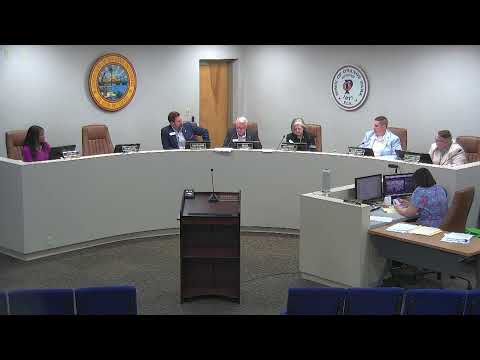
The Orange Park Town Council on Feb. 17 approved a $50,000 pilot grant program that will reimburse qualifying local businesses for part of the cost to replace or update commercial signage.
Town Manager explained the program is a matching grant that allows businesses to spend up to $7,000 and receive $3,500 back under the pilot, which is intended to help offset costs created by recently updated town sign requirements. "It's a matching grant," the town manager said as he summarized the program for council.
Staff and the town attorney told council that applicants must be in compliance with town code to qualify. Steven Smith, who the manager identified as having worked on the sign program, said properties with outstanding code violations are not eligible; if a violation was resolved (for example by removing a nonconforming sign), the business could apply. "If they brought it into compliance ... then they would be eligible," Smith said.
Council members and business owners pressed staff for details about edge cases. One councilwoman asked whether a new tenant could display a wall sign if the previous owner's freestanding sign was out of compliance; staff replied that wall signs (which are not part of the matching grant) can be permitted separately but the grant requires compliance before reimbursement. Council members also discussed whether the grant should pay to replace legally grandfathered nonconforming signs; staff said grant funds would only reimburse work that results in a conforming sign and that reimbursement will be made after receipts are submitted.
Local business owner George (who spoke during the discussion) said his recent experience illustrated the paperwork and expense when a tenant changes and signage is out of compliance. He emphasized support for monument‑style signs and opposition to flashing, electronic signage.
The council voted 4‑0 to adopt the pilot grant program and directed staff to finalize application materials and the exhibit A scope of work for legal review. The motion included the program’s eligibility standards: applicants must not have outstanding code compliance violations and must follow the grant’s guidelines requiring conforming signage at reimbursement.