Panel reviews cutting judge retirement contribution and reverting benefit tier in AM1978
Loading...
Summary
Committee heard LB1101 and AM1978, which would reduce (or eliminate under the amendment) the state's contribution to the judges' retirement plan, reduce some employee contribution rates, and increase the maximum COLA for certain judges; actuarial analysis showed the plan would remain well funded in projected scenarios, while judicial fiscal staff urged an incremental approach.
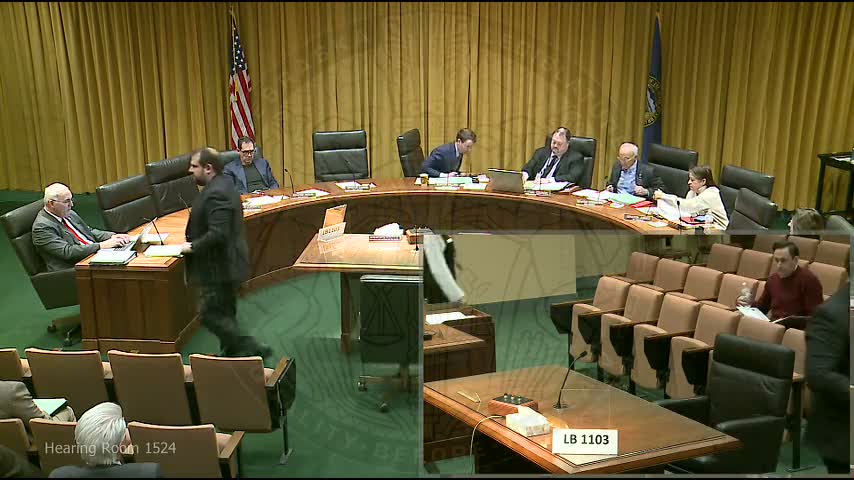
LINCOLN — The Nebraska Retirement Systems Committee considered LB1101 and committee amendment AM1978, measures that would change state and employee contribution rates and revert some benefit provisions in the judges’ retirement plan.
Senator Beau Ballard, who introduced the bill, said LB1101 implements the statutory review process created by LB17 (2017) and described an actuary’s recommendation to reduce the state contribution from 5% to 4% beginning July 1, 2026. Ballard also presented AM1978, which would go further: eliminating the state contribution in the amendment’s primary scenario, reducing employee contribution rates (a reduction from 10% to 9% for all judges and a separate reduction for judges with 20 years’ service), and increasing the maximum cost-of-living adjustment (COLA) for judges who became members after 07/01/2015 from 1% to 2.5%.
Ballard told the committee the judges’ retirement plan is currently in strong financial health and that an actuarial study included in the record projects the plan would remain funded under the amendment. "Even if AM1978 was adopted in its entirety, the judge's plan was still projected to reach a 112% funded ratio by 2046," he said.
Kenny Zoeller, director of the governor’s Policy Research Office, testified in support of LB1101 and AM1978, saying the plan has been above 100% funded since the 07/01/2021 valuation and that the fiscal trajectory provides an opportunity for savings to taxpayers and potential benefit changes for members.
Judicial stakeholders testified in neutral or explanatory capacities. Lancaster County District Court Judge Susan Strong, representing the Nebraska District Court Judges Association, thanked the committee and said removing the differential treatment would not risk fund health; she cited the current funded ratio (reported in the hearing as 105%) and the projected 112% by the mid-2040s. County court Judge Thomas Zimmerman echoed those points and said his association believes the amendment would not endanger the plan.
Eric Asboe, the judicial branch’s administrative fiscal analyst, urged caution and an incremental approach. "Any reduction in the rate should be incremental guided by the actuaries that have the best information and expertise on the factors that influence the plan both now and more importantly in the future," he told the committee, noting actuarial scenarios in the record that show the contribution could decline over several years under certain assumptions.
Ballard described fiscal outcomes in the record: the green copy’s change from 5% to 4% would save just over $300,000 to the general fund; the amendment’s elimination of the contribution was shown in the actuarial materials to save about $1.5 million. Several committee members asked technical questions about whether reductions would occur immediately or step down over multiple years; Ballard and staff clarified the amendment’s intended effective dates (many provisions beginning 07/01/2026) and the difference between an immediate statutory change and the actuary’s scenario if the Legislature took no action.
No formal action was taken at the hearing. Committee members asked for additional detail and some requested exact numerics and scenario clarifications from the actuarial report before reaching a final decision.
Why it matters: The judges’ retirement plan is currently overfunded in the actuarial projections presented, and the committee was asked to weigh taxpayer savings against long-term plan sustainability and judge recruitment/retention concerns.
What’s next: The committee will consider the actuarial results and stakeholder input as it decides whether to advance LB1101 and AM1978.