
Bill to create structured youth reentry program debated; questions on costs and statutory authority
Get AI-powered insights, summaries, and transcripts
Subscribe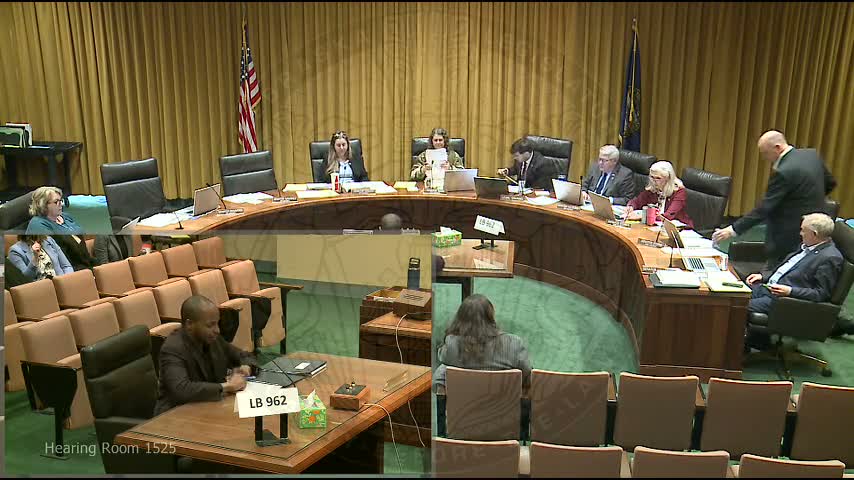
Summary
LB962 would create coordinated reentry planning, assign aftercare coordinators, and begin transition planning within 30 days of intake. Proponents said targeting housing, education and employment will reduce recidivism; probation and DHHS raised statutory, overlap, and fiscal concerns and said clarifying amendments will be needed.
Senator McKinney’s office introduced LB962 through legislative aide Michael A. Lee Jr.; the bill would establish a Youth Reentry and Transitional Support Act requiring coordinated transition planning beginning within 30 days of intake, assignment of an aftercare coordinator, and individualized transition plans addressing housing, school reentry, employment, Medicaid continuity, and mentoring.
Proponents including the Nebraska Children's Commission, ACLU, Voices for Children, and policy advocates argued that structured aftercare and case coordination improve outcomes, reduce recidivism, and are fiscally responsible over time by avoiding future system costs. Testimony cited research indicating structured reentry reduces recidivism and improves employment and education outcomes.
Neutral and implementing agencies raised operational questions. The probation administrator said LB962’s language could conflict with the Nebraska Supreme Court’s Simmons decision that ends probation when the term expires and that, as written, section 2 might require continued services for 12 months after probation ends—an authority probation currently lacks without explicit statutory change. DHHS noted overlap with the existing B2I (Bridging to Independence) program (statute 43-45-04) and suggested clarifying population, ages, and eligibility to avoid duplication.
Proponents said the bill leverages existing federal workforce and Medicaid resources rather than asking for new general-fund appropriations, but committee members pressed for clearer fiscal impact explanations. Probation and DHHS signaled ongoing collaboration with the sponsor; both agencies indicated they had suggested draft amendments to clarify statutory authority and reduce overlap.
The committee heard no final action; members and agency representatives agreed to continue technical discussions on jurisdictional authority, fiscal effects, and program overlap.