
Panel debates LB995 to expand appointment and clearer advisements of counsel for juveniles
Get AI-powered insights, summaries, and transcripts
Sign Up Free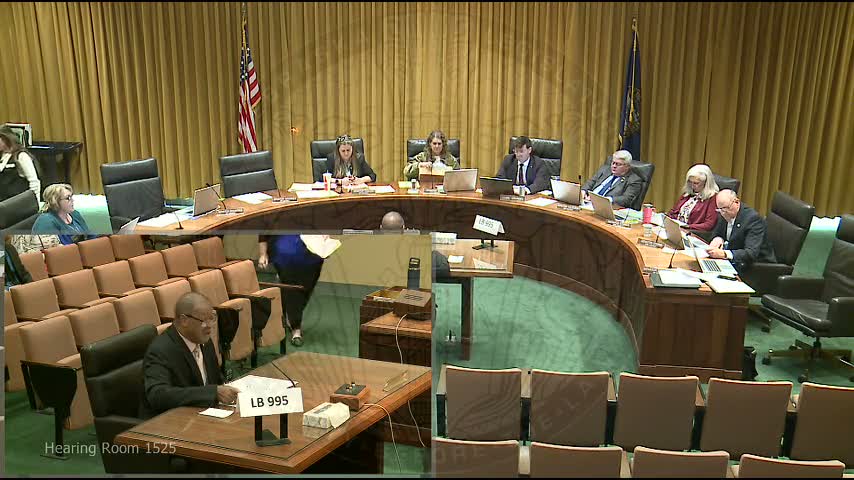
Summary
LB995 would require appointment of counsel upon filing qualifying juvenile petitions and mandate clearer, age-appropriate advisements. Supporters described widespread uneven access to counsel and traumatic consequences when youth waive representation; opponents warned of unfunded mandates and capacity shortages in rural counties.
Sen. Victor Rountree (District 3) introduced LB995, a bill to require appointment of counsel upon filing qualifying juvenile court petitions and to ensure juveniles and families receive clearer, developmentally appropriate advisements of the right to counsel.
Proponents included young people with lived experience, child welfare advocates, Voices for Children, the ACLU of Nebraska, Boys Town, the Nebraska State Bar Association, and the Nebraska Commission on African American Affairs. Testimony emphasized that juvenile proceedings often have life-changing consequences and that many youth—particularly in rural counties—do not meaningfully understand their right to counsel. Voices for Children said 76.8% of juveniles in Nebraska currently have attorneys and noted that geographic and courtroom-practice variation leaves a concerning quarter of kids without counsel.
Witnesses urged several specific changes: appointment at filing (mirroring practice in Douglas, Sarpy and Lancaster counties), age-appropriate written explanations of rights, documentation when a juvenile waives counsel, and limits on waivers for younger or high-stakes hearings. Advocates cited research on adolescent development and outcomes—including that a high share of youth waive Miranda and that confessions are a major source of youth exonerations—to argue for safeguards requiring meaningful counsel.
Opponents, notably the Nebraska County Attorneys Association, said LB995 as drafted could impose an unfunded statewide mandate requiring appointment at filing in every county and argued it may go beyond constitutional requirements. County attorneys and some senators raised concerns about workforce capacity in rural Nebraska, the costs counties would bear, and the practical availability of attorneys to meet an expanded appointment requirement. The Nebraska State Bar Association recounted the bill’s legislative history: earlier efforts were limited to counties with population above 150,000 as a compromise and subsequent expansions were politically contested.
Committee members probed whether LB995 would make appointments mandatory in every case or would instead strengthen advisements and procedures; proponents said the bill leans toward expanding appointment practices statewide while adding clearer advisement and documentation safeguards. Senators asked for fiscal and implementation details, including whether developmentally appropriate advisements are already in use in larger counties and how to address shortage and distribution of juvenile defense attorneys statewide.
Several witnesses signaled readiness to work on amendments; sponsors and committee members discussed narrowing or phasing implementation and codifying adult-supervision or waiver-validation procedures to reduce legal and fiscal risks.