
Nebraska hearing advances proposal to let victims sue websites that profit from child sexual-exploitation material
Get AI-powered insights, summaries, and transcripts
Sign Up Free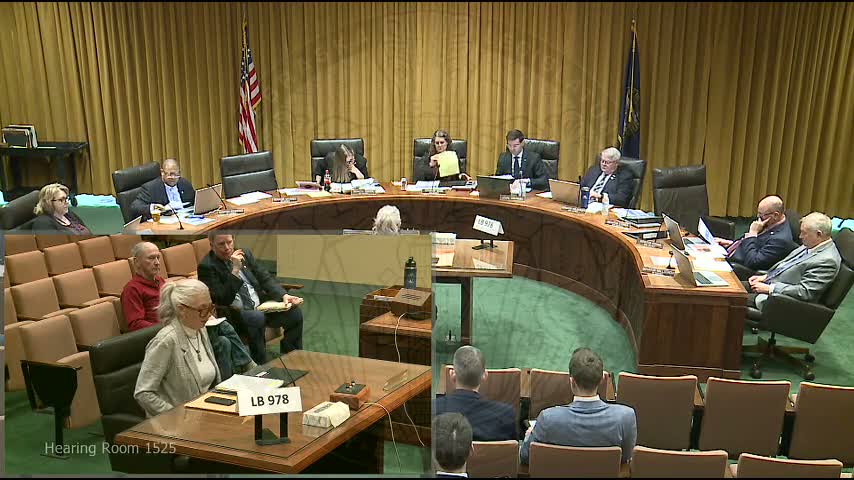
Summary
Sen. Tanya Storer told the Judiciary Committee LB978 would give victims a civil remedy against websites that publish child sexual-abuse material and against trafficking of childlike exploitation devices; proponents urged courts should be able to force takedowns and recover damages, while supporters said the law mirrors steps taken by other states.
Sen. Tanya Storer (District 43) introduced LB 978 on behalf of survivors, saying the bill would let Nebraskans sue websites and others who create or profit from child sexual-exploitation material and would ban possession or trafficking of childlike exploitation devices.
Storer told the Judiciary Committee the bill "strengthens civil enforcement" so victims can force removal of illegal content and recover damages; the attorney general would be able to seek injunctions. "This bill simply allows people harmed by illegal, obscene material to sue the website owners, to force them to remove the illegal content, and to recover monetary damages for harm," she said.
Proponents described the scale of online exploitation and urged a civil remedy. Trey Dellinger of AFA Action said law enforcement cannot address every incident and that private civil suits would be a "10x force multiplier." "I urge you to pass LB 9 78," Dellinger told the committee. Nate Grasz of Nebraska Family Alliance said the bill creates "a clear path to justice" for victims whose abuse is repeatedly distributed online.
Supporters emphasized narrowness on speech grounds and an exemption for ordinary internet utilities. Storer and witnesses said the bill targets material that is already illegal under Nebraska and federal law and would not reach constitutionally protected speech; the draft includes an explicit exemption for Internet service providers, search engines and cloud providers when they merely provide access.
Testimony also called for technical cleanup to ensure civil-penalty language and other sections align; Storer provided a white-copy amendment incorporating attorney-general language. Witnesses noted similar laws in other states and urged the committee to act; the chair recorded 139 proponent comments submitted online and no opponent or neutral comments at the time the hearing closed.
The committee did not take a vote; sponsors said they would work on language changes and corrections before any further action.