Hospice and nursing‑home advocates press committee to stop a 5% Medicaid reduction for hospice residents
Loading...
Summary
Proponents of LB944 told senators that when Medicaid nursing‑home residents elect hospice the current payment mechanics reduce the facility’s room‑and‑board payment by 5% and shift billing complexity to hospice agencies; DHHS opposed the bill, citing federal rules and audit concerns that require payment to hospice and could put federal funding at risk.
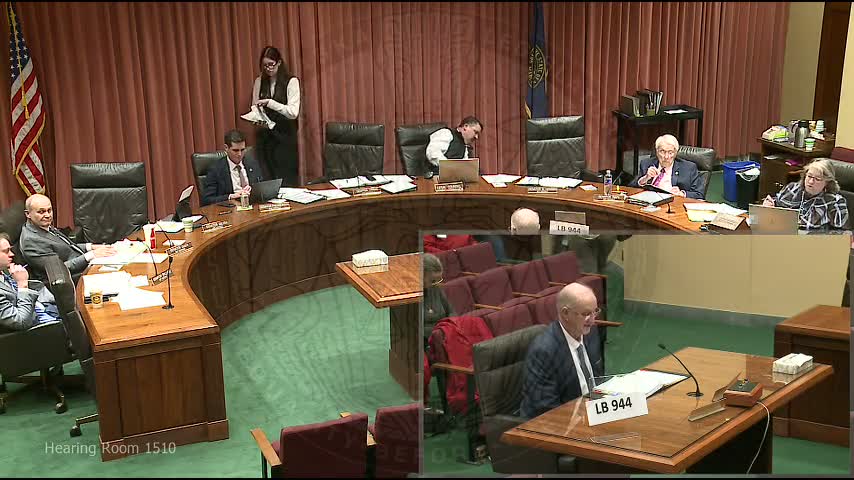
Sen. Myron Dorn introduced LB944 to require Medicaid room‑and‑board payments for nursing‑home residents who elect hospice to be paid directly to the facility at 100% of its approved rate rather than routed through hospice and reduced by 5%.
Marilee Malcolm, director of the Nebraska Hospice and Palliative Care Association, told the committee the current federal and state mechanics require hospice agencies to bill Medicaid for room and board and then pay the nursing facility at 95%, even though the facility continues to provide the same services. Malcolm said the structural arrangement forces hospice agencies to front payments, absorb administrative burden and, in some cases, decline to serve Medicaid nursing‑home residents.
Annie Paulmeyer (physician assistant and hospice administrator) provided data from a small rural hospice showing last year 37% of facility patients were Medicaid room‑and‑board residents and calculated an approximate $107,000 impact to a single rural hospice from the 5% pass‑through reduction. She said the policy drives access problems in rural Nebraska, where many nursing homes depend heavily on Medicaid residents.
Deputy division director Matthew Ahern testified for DHHS in opposition, saying federal rules implemented after 2013 Office of Inspector General audits and 42 CFR guidance require payment to the hospice provider to prevent duplicate billing and protect program integrity; he warned that changing the mechanism could jeopardize federal financial participation.
Committee members asked about the history of the 95% reduction, whether federal audits have been challenged, and what fiscal exposure a state change would create. DHHS said the federal regulation remains in effect and that the department’s opposition is based on the billing mechanism rather than rate policy; proponents said they modeled the bill on changes enacted in other states and cited local access harms.