
Committee hears emotional appeals and provider concerns on LB933 to protect medical cannabis recommendations
Get AI-powered insights, summaries, and transcripts
Subscribe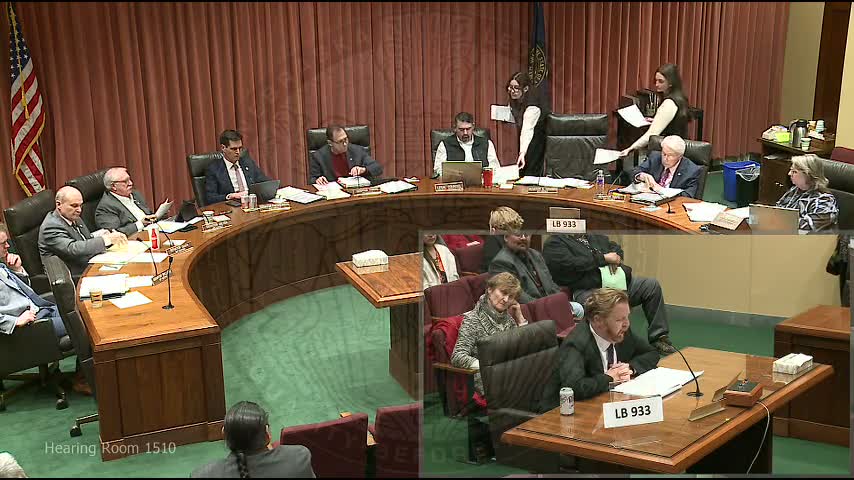
Summary
Sen. John Kavanaugh told the Health and Human Services Committee LB933 would add narrow legal protections for practitioners issuing written medical‑cannabis recommendations after voters approved the Patient Protection Act; parents, patients and advocates testified they cannot find Nebraska physicians willing to recommend cannabis because of perceived threats from the attorney general.
Senator John Kavanaugh introduced LB933 as a narrowly tailored bill to protect health‑care practitioners who issue written recommendations for medical cannabis under the Patient Protection Act, noting his amendment clarifies the bill would not shield practitioners who violate standards of care.
Proponents described a climate of fear they say prevents Nebraska physicians from issuing recommendations. Dominic Gillen said his 23‑year‑old son Will lives with treatment‑resistant Lennox‑Gastaut syndrome and is currently on multiple FDA‑approved drugs with black‑box warnings; Gillen asked the committee to advance LB933 so doctors can recommend cannabis without fear of disciplinary action, saying "doctors should be free to use their training, experience, and clinical judgment to recommend what they believe is best." (Gillen also noted his son currently takes Epidiolex, an FDA‑approved cannabidiol medicine.)
Christa Eggers, representing Nebraskans for Medical Marijuana, told the committee that nearly all major medical systems in the state have instructed physicians not to provide recommendations because of legal uncertainty and what she described as an attorney general threat last May. Senator Kavanaugh and testifiers cited voter approval (about 71% for the ballot initiative) and said 16 of the 17 medical‑only states provide similar provider protections.
Committee members pressed about dosing, who may make recommendations under statute, and whether the cannabis commission or the Patient Protection Act already addresses providers. Kavanaugh repeatedly said the commission lacks authority over practitioners and that the statutory written‑recommendation standard remains: a practitioner must decide in their professional judgment that benefits outweigh harms and follow the law; LB933 would prevent disciplinary action based solely on the issuance of a compliant recommendation.
Several parents and patients described traveling out of state to obtain recommendations and medicines and urged the committee to advance the bill to allow medical conversations without legal fear. No formal committee vote was taken during the hearing.