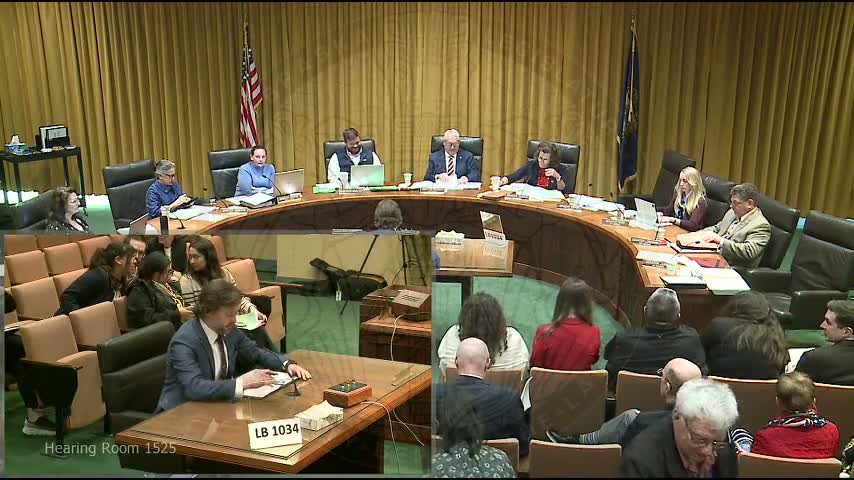
Education committee hears LB 1034 to require judicial warrants for immigration enforcement in schools
Loading...
Summary
LB 1034 would bar school employees from permitting federal immigration enforcement on school property without a judicial warrant; student witnesses, teachers and civil-rights groups testified that the measure would protect school safety and reduce absenteeism tied to enforcement fear.
Sen. George Dungan introduced LB 1034 to require a valid judicial warrant before federal immigration enforcement officers may access school facilities, grounds, or nonpublic areas for immigration enforcement purposes. The bill explicitly permits compliance with valid judicial warrants and allows entry in exigent circumstances.
Supporters included students, educators, civil-rights groups (Center for Immigrant and Refugee Advancement, ACLU of Nebraska), Nebraska Appleseed and local immigrant-advocacy organizations. Student testimony described fear and trauma when enforcement activity occurs near schools; one student said she has "heard students discuss keeping their citizenship papers in their backpacks just in case." Legal witnesses emphasized the difference between administrative warrants issued by DHS and judicial warrants signed by a judge and argued that the statute would restore a longstanding "sensitive locations" practice used by prior federal policy.
Proponents cited incidents in Minnesota and Los Angeles as evidence that increased enforcement presence near schools disrupts learning and causes attendance declines. NEA and school counselors described classroom trauma and long-term impacts on child wellbeing. Supporters said the bill would not obstruct lawful enforcement that follows judicial process but would protect schools from warrantless administrative-entry tactics.
Committee members probed the legal definitions and operational interaction with local SROs, magistrates and exigent circumstances. Legal experts explained that judicial warrants involve probable-cause review by a judge or magistrate; administrative warrants lack that judicial check. The bill closed with large online support (188 proponents, 27 opponents). No committee vote occurred during the hearing.