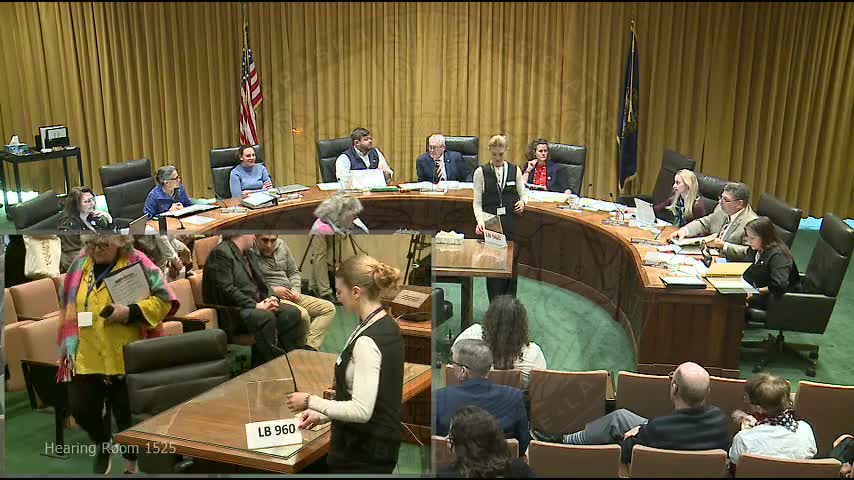
Committee hears support for LB 966 to make reduced-price school meals free statewide
Loading...
Summary
Sen. Makayla Cavanagh’s LB 966 would reimburse schools for the federal shortfall so students who qualify for reduced-price meals get them at no cost; educators, unions and advocacy groups cited research linking meal access to attendance and academic outcomes and urged advancement.
Sen. Makayla Cavanaugh introduced LB 966 to eliminate the out-of-pocket cost for students eligible for reduced-price school meals by providing a state reimbursement for the portion not covered by federal reimbursements. The bill aims to target families that fall above the free-meal threshold but still struggle to afford school meals; Cavanaugh said the fiscal note is approximately $1.2 million.
Proponents included the Nebraska State Education Association, the Omaha Education Association, school nutrition advocates, and community organizations. Tim Royers, president of the Nebraska State Education Association, cited a body of research showing expanded school-meal access improves attendance, nutritional outcomes and academic performance. "A hungry child cannot learn," testified Kathy Poehling of the Omaha Education Association.
Community groups and parents described unpaid meal debt, stigma, and reliance on school nutrition as de facto food security for many children. Voices for Children and Together (a food-security nonprofit) provided district-level estimates of students who would benefit and urged that the bill reduce barriers that keep eligible families from claiming benefits.
Questions from senators focused on program mechanics: whether reimbursements occur a year in arrears, how schools would pay up front, and whether expanding to fully universal meals would be cost-prohibitive. Cavanaugh and witnesses cited the pandemic as a natural experiment demonstrating improved participation and outcomes under universal-meals policies.
The hearing closed with a large number of online proponent signatures (115 proponents, 15 opponents) and no committee vote recorded during the hearing.