
Nebraska hearing on LB 960: push to require nonvoting student members draws mixed support
Get AI-powered insights, summaries, and transcripts
Subscribe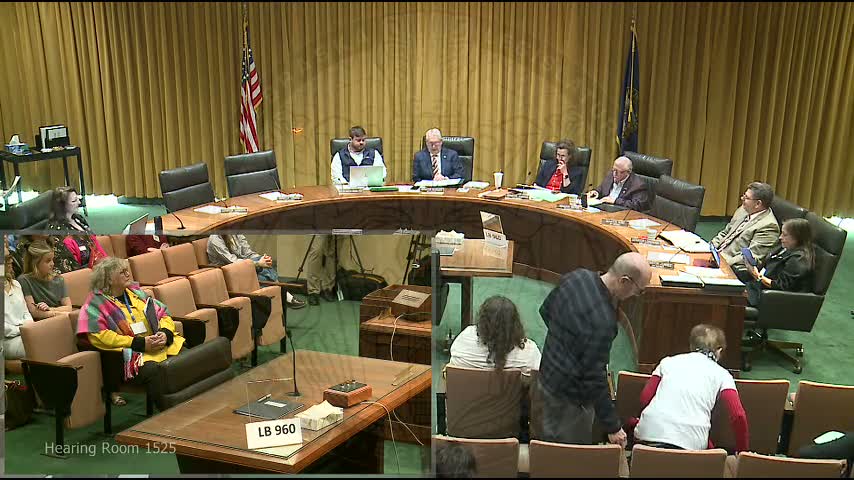
Summary
Supporters, including students and education groups, urged the Education Committee to advance LB 960 to add nonvoting student members to school boards; opponents—including school board associations and rural districts—argued the decision should remain local and noted existing statute allows voluntary student representatives in many districts.
Sen. Terrell McKinney introduced LB 960 to require public school boards to include nonvoting student members, with an amendment allowing districts flexibility to appoint between one and five advisory students and to set term lengths.
Proponents framed the bill as a civic-education measure that strengthens governance by bringing student perspectives directly into board discussions without shifting voting authority. Daniel Russell of Stanford Schools told the committee the amendment "restores appropriate local control and flexibility" while ensuring meaningful student representation. Student witnesses and youth organizations, including New Voices, described how student members can bridge classroom experience and board decision-making.
Opponents stressed local control and operational concerns. Lisa Albers of Grand Island Public Schools, representing the Nebraska Association of School Boards, argued the inclusion of a student representative should remain a local board choice and pointed out a statutory quirk: "Nebraska Revised Statute 79-5,59 currently authorizes class 1–4 school boards to include nonvoting student members; it does not extend to class 5 districts such as Omaha Public Schools," she said, urging a targeted statutory fix rather than a statewide mandate.
Jack Moles of the Nebraska Rural Community Schools Association testified that many districts already allow student involvement and that a blanket requirement could be impractical in small, rural districts where students juggle multiple responsibilities. Committee members asked whether the bill would mandate one or more student members and whether Omaha and other class 5 districts could be authorized; McKinney said the amendment gives boards discretion to select 1–5 student members and that he would be open to clarifying class 5 technicalities.
The committee closed the hearing with a report of online submissions: 21 proponents and 24 opponents. No formal vote was taken during the hearing; senators asked staff for further information and potential statutory clarifications.