
Debate splits Nebraska ag panel over move to a voluntary, statewide brand inspection system
Get AI-powered insights, summaries, and transcripts
Subscribe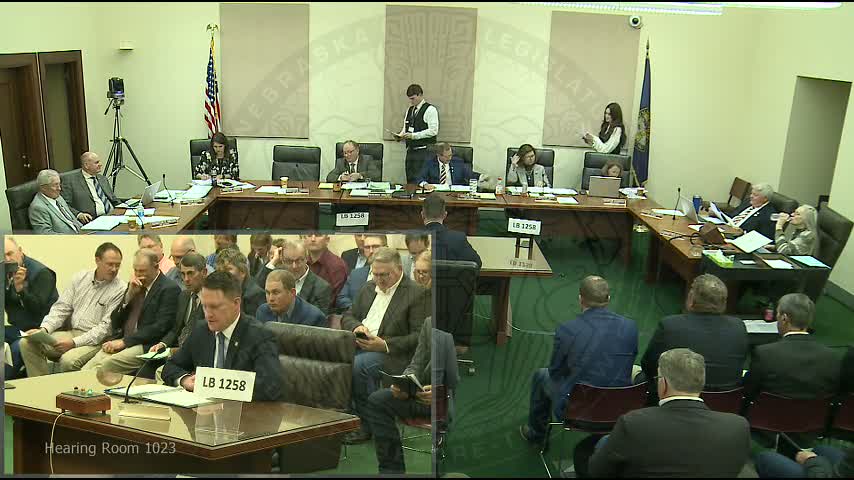
Summary
Sen. Ben Hansen's LB 12‑58 would move brand administration under the Department of Agriculture and make inspection voluntary statewide. Proponents (feeders, large buyers, industry groups) said voluntary, uniform rules would reduce red tape and attract commerce; Brand Committee leaders, county sheriffs, bankers and cattle organizations warned voluntary rules would weaken ownership verification and shift unpaid costs to counties and lenders.
Sen. Ben Hansen opened the Agriculture Committee hearing on LB 12‑58 by arguing the bill's purpose is statewide uniformity: "The primary goal of LB 12 58 is simple, statewide uniformity," he told the committee, saying producers in different parts of Nebraska face different rules that create competitive disadvantages.
What LB 12‑58 would do: the bill would transfer administration of brand recording and inspection functions to the Nebraska Department of Agriculture, convert mandatory brand inspection in the western brand area into a voluntary system statewide, and preserve brand registration and renewal. Proponents said the change would maintain brand recording, investigations and criminal enforcement while eliminating a patchwork of mandatory rules that some buyers reported avoid by shipping cattle to other states.
Arguments for change: feedlot operators, industry groups and some bankers told the committee that mandatory inspections impose time, paperwork and audit burdens that discourage commerce. Curry Sexton of Foote Business Services (Imperial Beef) described years of large cattle throughput and said his company had encountered no cattle‑theft problems at its feed yards; he and other proponents pointed to Kansas's voluntary system and said Nebraska risks losing cattle and customers to states with simpler rules.
Opposition and concerns: Duane Gangwish, chair of the Nebraska Brand Committee, spent his testimony warning that abolishing or substantially weakening mandatory inspection would "decimate" a system that provides third‑party verification of ownership and deters theft. County sheriffs and the Nebraska Association of County Officials testified that shifting duties to law enforcement would impose unfunded mandates, require training and add operational costs. Bankers and the Nebraska Livestock Markets Association told the committee the Brand program underpins lender confidence and market integrity: one market operator calculated that 20 Western Nebraska markets sold roughly 1.4 million head last year, representing an estimated $3.4 billion in commerce on which title certainty matters.
Areas for compromise identified in hearing: Brand Committee witnesses said they had drafted modernization proposals (clarified acceptable evidence of ownership, reduce duplicate inspections for registered feedlot/grow‑yard flows, consider dairy exceptions and e‑inspection) and asked for more negotiation. Several speakers—both proponents and opponents—urged formal, industry‑led working groups to resolve specific audit, fee and inspection overlap issues.
Next steps: committee members did not take immediate action. Proponents asked the committee to consider the broader economic case for statewide uniformity; opponents urged incremental modernization rather than a wholesale shift to voluntary inspection.