
Roanoke hears FEMA‑reviewed regional hazard mitigation plan; adoption set for March 2
Get AI-powered insights, summaries, and transcripts
Subscribe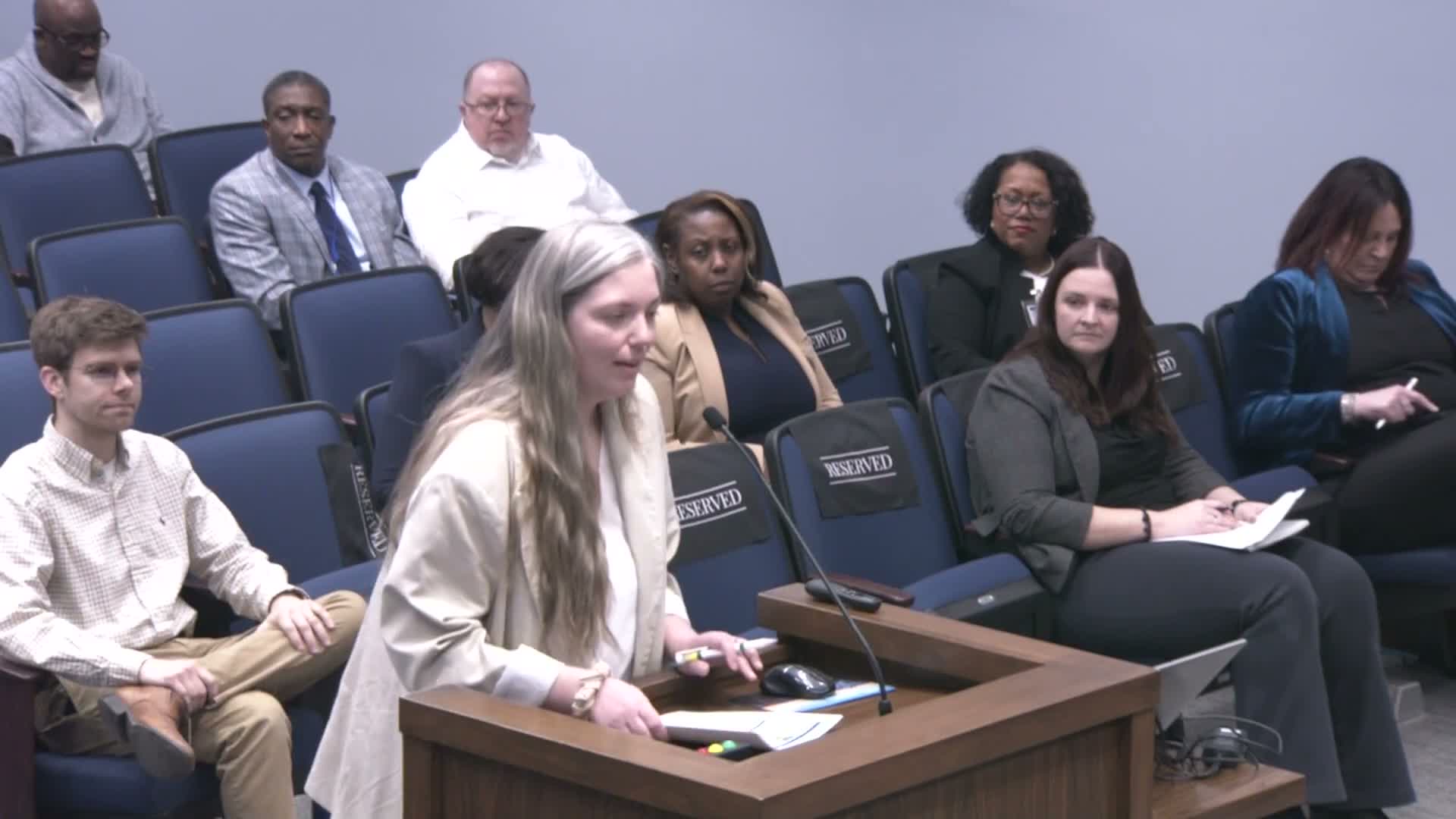
Summary
Amanda McGee of the regional commission briefed council on an FEMA‑reviewed, five‑year regional Hazard Mitigation Plan that prioritizes flood mitigation and includes new adopting jurisdictions; council questions focused on wildfire scoring, air quality and whether the plan models combined events. (Adoption scheduled March 2.)
Amanda McGee, director of community development for the Roanoke Valley regional commission, told Roanoke City Council on Feb. 17 that the region’s five‑year Hazard Mitigation Plan has been reviewed and approved by FEMA and will return to council for formal adoption on March 2.
The presentation described a 49‑member steering committee and broad stakeholder outreach, including 251 public survey responses. McGee said the plan is a federally required document that enables hazard‑mitigation funding through programs such as FEMA’s Hazard Mitigation Grant Program and that the full document — more than 160 pages for jurisdiction sections and over 800 pages with appendices — is included in the council packet.
McGee told council that flooding is both the most experienced and most frequently cited concern in the region and that the city has recorded 797 paid flood claims since 1981 totaling $18,852,734; the plan identifies 85 repetitive‑loss structures and 11 severe repetitive‑loss structures. She said the city is a participant in FEMA’s Community Rating System, which can provide flood‑insurance discounts for residents, and that several of the plan’s proposed projects are focused on floodplain management and stormwater mitigation. McGee also noted the Spring Hollow and Carvins Cove reservoir dams and two other private dams as high‑hazard facilities relevant to the city’s risk profile.
Council members asked specifically about wildfire risk and the plan’s treatment of air quality and drought. McGee said wildfire risk was assessed using a model provided by the Virginia Department of Forestry that focuses on the number of homes directly exposed in an urban wildland interface; by that measure the city rated low while several surrounding localities scored higher. She noted the plan did not assess air‑quality impacts and identified that as a data gap the region could address in future updates. McGee said drought was excluded because the state requires a separate, mandated water‑supply planning process.
On whether the plan models combinations of hazards (for example, ice and wind occurring together), McGee said the risk assessment generally treats hazards individually, though some case studies in the plan reference combination events; specific vulnerability assessments often look at combined impacts for key infrastructure. City staff said they would follow up with more granular claims‑trend information and noted that voluntary acquisition of repeatedly flooded properties — funded largely through federal programs — has reduced risk in some locations.
The commission’s presentation also highlighted that the Western Virginia Water Authority and the Roanoke Valley Resource Authority are new adopting jurisdictions for this iteration of the plan. McGee emphasized the list of recommended projects in chapter 7 and encouraged council members to review the city‑specific sections and appendices ahead of the March 2 adoption vote.
The briefing closed with council and staff follow‑up commitments: staff will provide additional detail on flood‑claim trends and the city will continue coordinating with utilities and regional partners on mitigation efforts ahead of formal adoption.