
Debate grows over LB1028 as lawmakers weigh nutrient plans, cover crops and inspection costs
Get AI-powered insights, summaries, and transcripts
Subscribe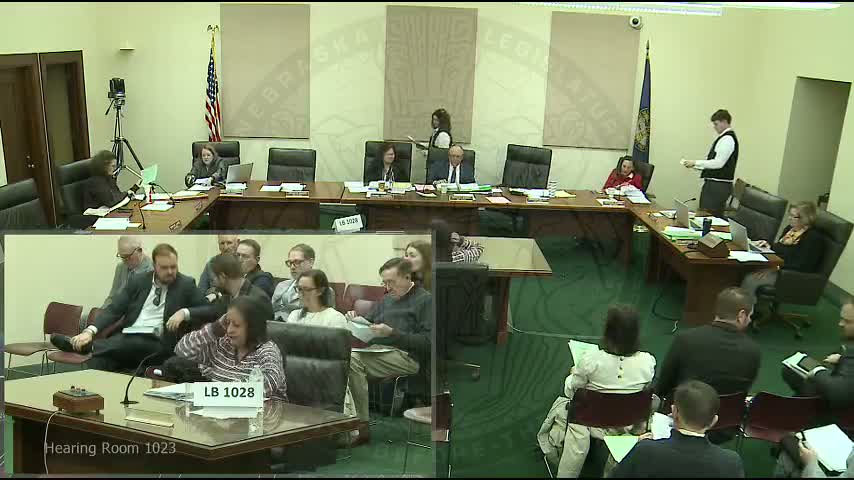
Summary
Senator Margo Juarez’s LB1028 would require large livestock waste applicators to file nutrient management plans with NDWEE and adopt cover crops and 30-foot buffers in many cases; proponents said the bill increases transparency and protects groundwater while opponents called it duplicative, costly and agronomically inflexible.
Senator Margo Juarez introduced LB1028 to the Natural Resources Committee as a targeted approach to limit nutrient leaching from large livestock waste applicators.
Senator Margo Juarez, the bill’s sponsor, said LB1028 aims to prevent contaminants from entering groundwater by requiring nutrient management plans for the state’s largest waste applicators, strengthening cover-crop practices, and establishing a 30-foot grass buffer where waste is applied adjacent to rivers and streams. Juarez described AM1967 as a technical amendment that narrows the requirement for plan updates to instances of a "material modification" — such as changes in animal numbers or manure-handling systems — and argued that a filing fee could offset NDWEE implementation costs.
Proponents included farmers, conservation scientists and conservation groups. Graham Christiansen, who farms in eastern Nebraska, said the bill would create transparency because Nebraska lacks a comprehensive database of where livestock waste is applied. Matthew Sutton, who described a decade of groundwater fieldwork, told the committee his studies show persistent nutrient contamination and said buffer strips and cover crops are scientifically justified. John Hansen of the Nebraska Farmers Union and Andrea Bache, an agronomy professor at the University of Nebraska–Lincoln, also testified in favor of the bill’s farmer-led conservation approach.
Opponents raised concerns that the bill duplicates existing federal and state requirements and imposes costly, one-size-fits-all mandates. Walt Trout, a pork producer and president of the Nebraska Pork Producers Association, told the committee LB1028 “duplicates an oversight framework that is already in place,” asserting that large operations already follow state-required nutrient-management protocols. Sam Drinin (Nebraska Cattlemen) and other agricultural groups argued mandatory cover crops and permanent 30-foot buffers may be impractical on some soils and that public posting and annual updates create burdens and privacy concerns.
Committee members pressed the sponsor on the fiscal note. Senator Jane Raybould cited NDWEE’s fiscal estimate that would add several full-time positions; Juarez said narrowing update triggers and a potential filing fee could reduce that need. Multiple testifiers urged a collaborative approach that balances water protection with workable agricultural practice.
The committee did not vote on LB1028. Staff reported 46 proponents, 9 opponents and 3 neutrals in the hearing record. Any future action will hinge on amendment language, fiscal analysis from NDWEE, and whether stakeholders and agencies agree on practical implementation details.