
Committee weighs faster decisions and longer assistance windows for sports‑arena financing (LB 11‑16, LB 9‑18)
Get AI-powered insights, summaries, and transcripts
Sign Up Free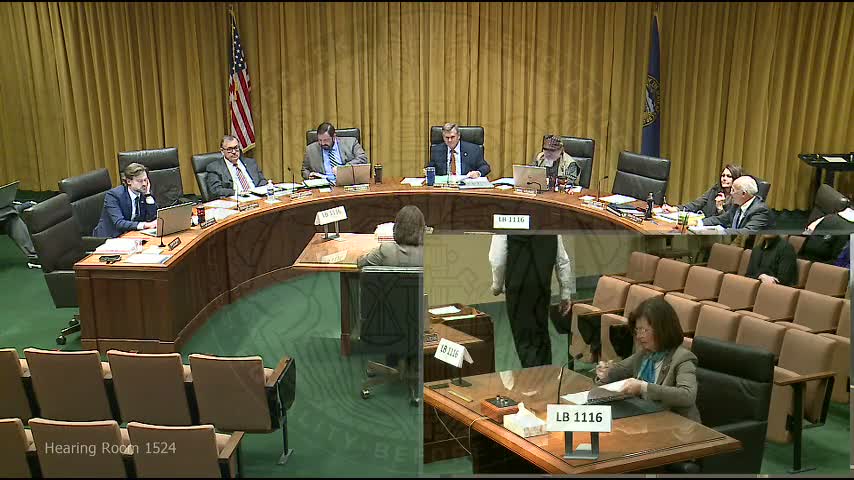
Summary
Two bills (LB 11‑16, LB 9‑18) seek to speed SSAFA decision timelines and extend state assistance windows for small municipalities. Supporters said delays stall projects and tourism dollars; proponents with ready projects warned partners could withdraw without timely action. The committee asked detailed questions about new‑sales sourcing and governance.
Senator Theresa Ibach introduced LB 11‑16 to revise the Sports Arena Facility Financing Assistance Act (SSAFA), proposing a 30‑day decision deadline for the reviewing board, removal of the governor’s mandatory affirmative vote for temporary approvals, and an extension of allowable years of state assistance from five to ten for sports complexes in second‑class cities and villages.
Proponents — including event organizers, developers and the Wolfpack Sports Foundation — told the committee the current multi‑month delays stall projects, increase costs and cost Nebraska tourism dollars. Anthony Carrow said recent events lost room nights and estimated single‑event revenue losses in the millions; Craig Wolf described a Gretna project with private commitments contingent on approval, and Jeff Week (an SSAFA practitioner) clarified that temporary approval does not itself trigger funding and that projects must show new‑sales growth to qualify.
Committee members pressed on operational questions: whether the 30‑day clock follows a completed application and public hearing (testimony said yes), how the statute defines “new” sales tax (commencement and development agreements play a role), and whether changes would increase denials. Questions also covered the existing split in assistance percentages (70% for major projects, a community fund split) and how the competitive grant process is administered.
Senators discussed coordination between LB 11‑16 and similar bills (LB 9‑18). Senator Danielle Conrad, who introduced LB 9‑18, explained her amendment to remove the governor from the review board to reduce politicization for projects in historically underserved areas. The committee closed both hearings after additional questions and submitted testimony was recorded.