
Nebraska bill would let resident landowners transfer hunting permits; Game and Parks warns of management, fiscal risks
Get AI-powered insights, summaries, and transcripts
Subscribe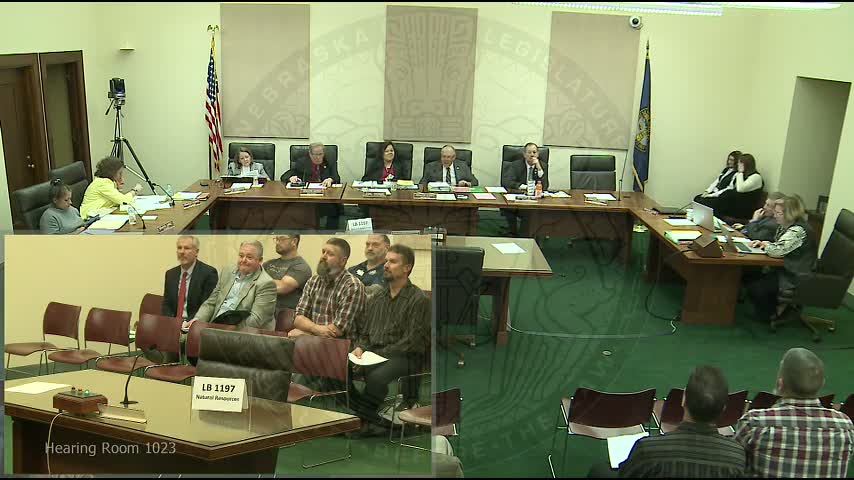
Summary
Sen. Tanya Storer introduced LB1197 to let Nebraska resident landowners transfer limited landowner hunting permits via the Nebraska Game and Parks Commission. Supporters said it would expand access and transparency; opponents, including the Game and Parks director and hunting organizations, warned of enforcement costs, quota impacts and a potential secondary market.
Sen. Tanya Storer, R‑District 43, told the Natural Resources Committee that LB1197 is intended to let Nebraska resident landowners transfer their limited landowner hunting permits to a named designee through the Nebraska Game and Parks Commission.
"LB1197 allows Nebraska resident landowners to transfer their hunting permits to a designee through the Nebraska Game and Parks Commission," Storer said, stressing the transfers would occur at face value and ‘‘this is a regulated transfer process, not a commercial sale." She said the goal is to give landowners a narrow, accountable way to manage wildlife on private property and allow family members and other Nebraskans access to hunts that otherwise are limited.
In questions from committee members, Storer acknowledged the bill needs clarifying language to prevent commercialization or exploitation and said she is open to amendments. Committee members pressed whether transfers would reduce state revenues if nonresident hunters used transferred landowner tags (nonresident fees are higher), and whether transfers would create a secondary market for tags.
Timothy McCoy, director of the Nebraska Game and Parks Commission, testified in opposition and outlined technical and enforcement concerns. McCoy highlighted differences in how landowner permits work by species, noted landowner permits for deer and turkey are currently unlimited, and said the agency would likely need new programming, additional staff capacity and changes to track transferred permits and appropriate fees. "There are some specific concerns ... we need to work on," McCoy said, noting possible fiscal impacts and the need for a clear name and treatment for transferred permits so they carry required stamps and eligibility checks.
Opponents from hunting and conservation groups warned the bill risks creating a two‑tier system that privileges those who can access transferred tags and could reduce opportunities for non‑landowning residents. Marcus Drak, an opponent, argued the proposal would "commercialize the landowner tags," saying it risks privatizing hunting rights that, under the North American model of wildlife conservation, are held as a public trust.
Proponents, including ranchers who manage wildlife on private land, said the measure would create transparency compared with informal arrangements and could expand access for youth, veterans and disabled hunters. Lee Simmons, a fourth‑generation rancher, said the bill represents "a fair and reasonable compromise" and would allow landowners to share resources with "friends, family, deserving youth, and developmentally disabled individuals."
The committee heard extensive testimony on how the current statutory structure treats landowner permits differently by species (for example, elk landowner permits are drawn and can cover a wider unit; deer and turkey landowner permits are unlimited in some respects), along with concerns about enforcement, habitat stamps, and statutory eligibility expansions over recent years. Committee members also noted the fiscal note and programming costs cited by Game and Parks and asked about limiting transfers by acreage or number of transfers.
The hearing record included written and online comments: committee staff reported eight online proponents and 72 opponents. The Natural Resources Committee closed the public hearing on LB1197 without taking a vote; sponsors signaled willingness to refine the language.
Next procedural steps: no committee action was recorded during the hearing. If the bill advances, committee amendments are likely to address limits on transferability, fee handling for nonresidents, programming and enforcement language, and explicit anti‑commercialization provisions.