
Providers and DHHS clash over state requirement to standardize emergency safety‑intervention training
Get AI-powered insights, summaries, and transcripts
Subscribe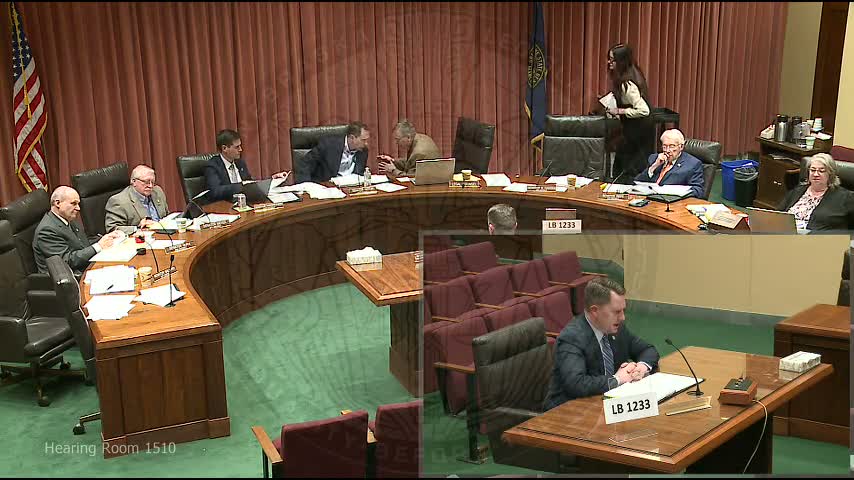
Summary
LB1233 responds to a DHHS provider bulletin mandating a single proprietary Emergency Safety Intervention curriculum (MANT). Providers told the committee the requirement shifted hundreds of thousands in annual costs to agencies; DHHS defended a single model for statewide consistency and safety.
Senator Ben Hansen introduced LB1233, the Developmental Disabilities Provider Training and Cost Reduction Act, which would limit the Department of Health and Human Services’ authority to require a single proprietary curriculum for Emergency Safety Interventions (ESI) and would allow approved in‑house or alternative nationally recognized curricula when they meet competency standards.
Multiple developmental‑disability providers and statewide associations testified that a DHHS provider bulletin requiring the MANT curriculum as the only accepted system created a monopoly, imposed significant biannual and annual costs, and reduced providers’ ability to deploy scarce resources for wages and direct services. Witnesses provided cost breakdowns (trainers, backfill, certification and travel) and said the change increased operating losses for some large providers. “These costs are not abstract,” said Alana Schriver of the Nebraska Association of Service Providers, urging flexibility and alignment with federal CMS guidance emphasizing outcomes and competency rather than a single branded curriculum.
Tony Green, director of the Division of Developmental Disabilities at DHHS, testified in opposition to LB1233. He said the division has a statutory responsibility to ensure safety and consistent training statewide; after reviewing multiple curriculums, the department concluded a single model would promote consistent de‑escalation and restraint‑avoidance techniques and reduce variance in practice. Green acknowledged implementation costs were offset in part by ARPA funding during rollout and said the department remains open to reviewing multiple nationally recognized models but opposes permitting unreviewed homegrown programs that may vary widely in content and safety.
The hearing revealed a negotiated space: providers urged either a multi‑vendor approved list, state negotiation of vendor fees, or state assistance to offset mandated costs; DHHS emphasized uniform safeguards and the practical challenges of approving many distinct provider curricula. The bill sponsor said he would continue to work with the department to find a path forward.