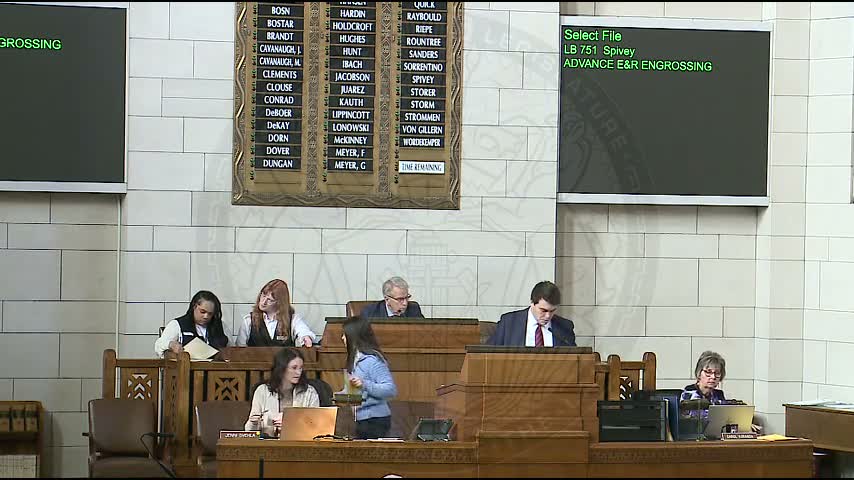
Senate floor erupts over amendment to align fentanyl penalties with other drugs; bracket motion fails
Loading...
Summary
Senators debated AM2092, which would align fentanyl trafficking penalties with existing weight‑based enhancements for methamphetamine, heroin and cocaine. Supporters called it a public‑safety alignment; opponents warned the amendment would create more felonies and expand incarceration without clear evidence of improved public safety. A motion to bracket the bill failed and debate continued.
Floor debate on LB795 focused on AM2092, an amendment to bring fentanyl trafficking and distribution into parity with a weight‑based penalty framework used for other controlled substances.
Senator Storer introduced AM2092 as an alignment measure, saying the state currently lacks the same graduated, weight‑based thresholds for fentanyl that are applied to methamphetamine, heroin and cocaine. “AM2092 simply applies the same structure,” Storer said, arguing the change gives prosecutors and courts “clear tools to target the highest level traffickers responsible for the harm we’re seeing in our communities.”
Opponents urged caution about attaching the amendment at select file and about enhancing penalties without evidence of benefit. Senator Dungan argued the amendment would add penalties in a way that may not achieve crime‑reduction goals and warned about the costs of longer sentences. “When you increase penalties for offenses that already have high penalty ranges, deterrence theory fails to work,” Dungan said during floor remarks.
Senator McKinney moved to bracket the bill until April 17, citing concerns about adding enhancements and creating more felonies; that bracket motion was defeated on the floor. Multiple senators debated larger penological questions — deterrence, incapacitation and rehabilitation — and whether enhanced penalties reduce crime or simply increase prison populations and general‑fund costs.
The floor recorded motions to cease debate, placed the chamber under call and took roll‑call votes during the session. Proponents said AM2092 is a calibration to account for fentanyl’s lethality and mixture into other substances; opponents described the change as procedurally improper at select file and warned of unintended consequences for sentencing and incarceration rates. Further floor action on the bill and its amendment remained pending at adjournment.