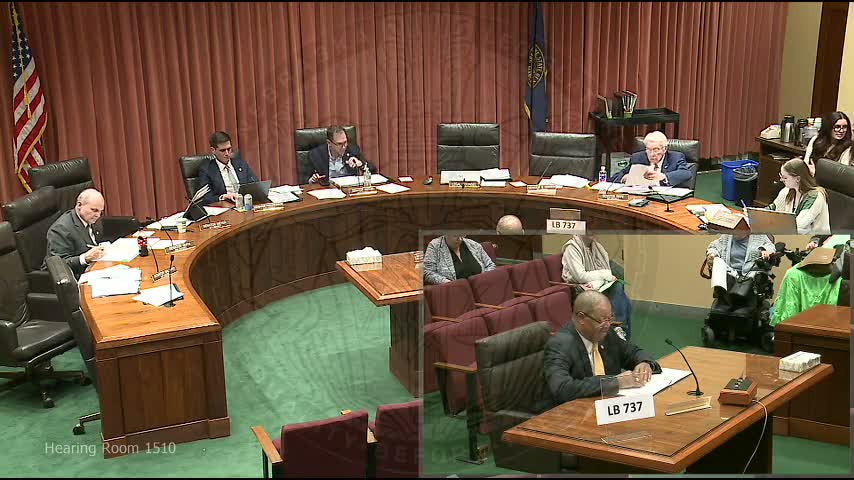
Senator Rountree pushes annual Olmstead review; advocates want stronger reporting and benchmarks

Nebraska Legislature Health and Human Services Committee · February 18, 2026

Get AI-powered insights, summaries, and transcripts

Subscribe
AI-Generated Content: All content on this page was generated by AI to highlight key points from the meeting. For complete details and context, we recommend watching the full video. so we can fix them.

Summary

LB737 would require an annual joint hearing by the Health and Human Services and Urban Affairs committees to review Nebraska’s Olmstead plan. Disability advocates urged yearly oversight, better data on accessible housing, and measurable benchmarks to track progress toward community integration.

Senator Victor Rountree introduced LB737 to require an annual joint hearing of the HHS and Urban Affairs committees to review progress on Nebraska’s Olmstead plan and to submit a report to the Legislature. Rountree said the measure grew from interim work on affordable, accessible housing and repeated testimony that many stakeholders — including municipal officials and housing developers — are not fully aware of Olmstead obligations.

Advocates and advisory‑committee members who testified said the current statutory reporting cadence (every three years in materials and committee practice) is insufficient. Kathy Hall, co‑chair of the Olmstead Committee, told the committee Nebraska lacks timely data on accessible housing and that annual oversight would allow the Legislature to identify gaps and propose corrective legislation sooner. Joni Thomas and Beth Libri urged stronger reporting standards, measurable benchmarks, and meaningful inclusion of people with lived experience in evaluation and oversight.

Disability Rights Nebraska and other witnesses cited a 2024 letter of findings from the U.S. Department of Justice that raised concerns about mental‑health community integration in Nebraska and said heightened legislative oversight could help remediate systemic issues. Committee members discussed model states and implementation mechanics; testimony named Minnesota, Colorado and Oregon as states with substantive Olmstead efforts.

Sponsor and proponents emphasized that an annual review would not itself create new funding but would produce public, legislatively actionable data to address gaps in accessible housing, transportation, employment and other integration measures. The committee concluded the hearing with the sponsor urging advancement to general file so the Legislature can address identified gaps.