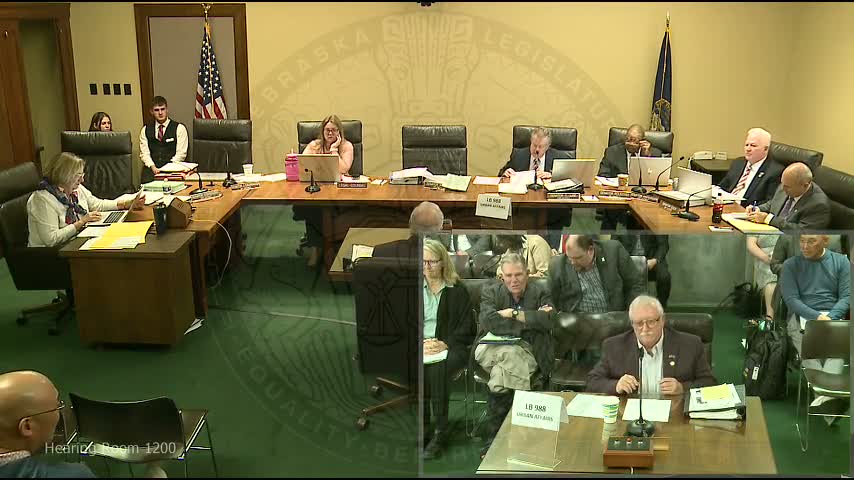
TIF reform bill draws sharp opposition from housing developers, nonprofits and municipal officials
Loading...
Summary
LB988 would narrow TIF uses, require on‑site inspector findings of uninhabitable structures to declare blight, change the redevelopment effective date, prohibit some reallocations of excess TIF funds and restrict voter‑approved transportation projects; developers and housing groups said the changes would block affordable and workforce housing projects that rely on TIF.
Sen. Glenn Meyer told the Urban Affairs Committee LB988 aims to "restore the original intent" of tax increment financing (TIF) and to stop perceived abuses of the community development law.
Meyer said the bill would tighten the definition of blighted/substandard so an inspector designated by a governing body must declare structures uninhabitable (or at least one recently demolished structure must exist) before an area can be declared blighted. He also proposes defining the effective date of redevelopment projects as the date when the governing body votes to approve the redevelopment plan, prohibiting use of redevelopment project funds for other projects, and barring the use of TIF for certain transportation projects that were first approved by voters.
Opponents included developers, municipal attorneys and nonprofit housing providers who argued the bill would seriously limit TIF as a financing tool for affordable and workforce housing. Fred Hoppe, a developer, said LB988 "kills" many projects that relied on TIF to fund infrastructure in greenfield subdivisions and affordable housing. Andrew Willis, an attorney, warned the bill’s effective‑date language could shorten the constitutional 15‑year TIF period by causing projects to lose years during preconstruction and construction, undermining feasibility. Habitat for Humanity of Omaha and other housing advocates described dozens of homes that were built or would not have been feasible without TIF.
Deputy State Auditor Craig Kubicek testified in a neutral capacity, summarizing the auditor's 2024 letter that flagged concerns about TIF‑related financial controls, project tracking, and the liberal‑construction language in current law.
The committee heard extensive, often technical testimony about statutory language, unintended consequences, and the tradeoffs between oversight and preserving a financing tool for housing. No committee action or vote was taken at the hearing.
Next steps: The bill will likely draw technical drafting changes and more testimony on specific legal issues (effective date, preapproval expenses, allowable use of proceeds) before a committee vote.