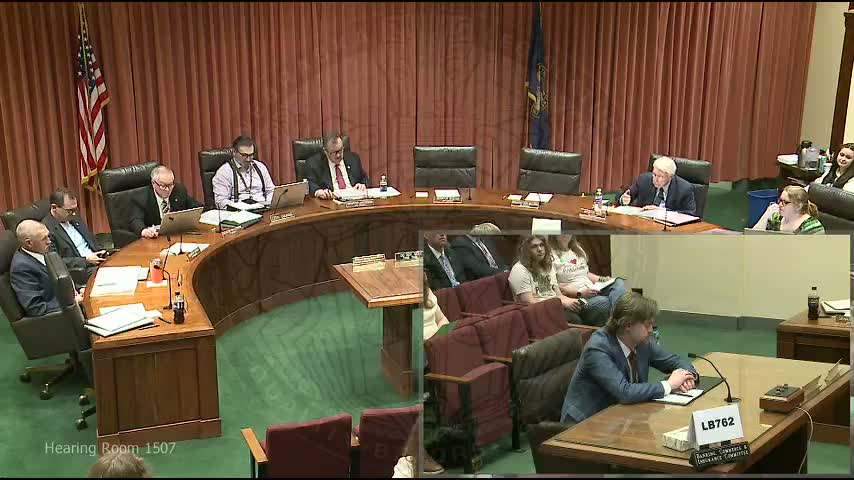
Nebraska hearing on LB762 spotlights families seeking mandated insurance coverage for PANS/PANDAS
Loading...
Summary
At a Banking, Commerce and Insurance Committee hearing, families and pediatric specialists urged passage of LB762 to require insurers to cover treatments for PANS/PANDAS — including costly IVIG infusions — while insurers urged caution, citing limited clinical evidence and patient-safety concerns.
Senator George Duncan introduced LB762 at a public hearing before the Banking, Commerce and Insurance Committee, saying the bill would require insurers to cover treatments prescribed by medical professionals for pediatric acute-onset neuropsychiatric syndrome (PANS) and pediatric autoimmune neuropsychiatric disorders associated with streptococcal infections (PANDAS). "This is a clinical diagnosis," Duncan said, and added that when intravenous immunoglobulin (IVIG) is needed it can cost up to $15,000 per infusion and recur monthly for some patients.
The committee heard testimony from medical experts and families. Dr. Phil Bouchier, a pediatrician in Lincoln, said most children begin with antibiotics and anti-inflammatory therapy, but "about 10 percent" of those with PANS may need IVIG to recover. "For children that need it, it is life changing," Bouchier said. He and other clinicians described PANS/PANDAS as a rule-out clinical diagnosis without a single definitive test and described a treatment pathway that reserves immunomodulatory therapies for severe, refractory cases.
Several families described inconsistent insurer decisions and delays that they said harmed children. Ten-year-old Violet Troop told senators, "When my immune system tries to defend me, it would not also attack my brain," and asked the committee to help make treatment accessible. Parents described denials they said contained factual errors and said approvals were often granted only after appeals or third-party intervention. One parent said an IVIG infusion schedule of about every 28 days was necessary to prevent relapse.
Insurers and their trade associations opposed the mandate. Jeremiah Blakey, government affairs director for Blue Cross Blue Shield of Nebraska, said his company recognizes PANS/PANDAS but does not cover IVIG for that diagnosis because the body of clinical research “does not support the wide use of this therapy in this condition.” Blue Cross distributed material referencing an American Academy of Pediatrics clinical report that recommends cautious, limited use of immunomodulatory therapies and administration in appropriate monitored settings.
Representatives of the Nebraska Insurance Federation warned that a state mandate beyond essential health benefits could shift costs to premiums and to the state for those enrolled in ACA exchange plans. They also said plan design should follow robust clinical evidence and noted that some insurers already cover IVIG in particular instances.
Senator Duncan closed by stressing the bill is intended to ensure access when medically necessary and said he would continue to provide the committee with clinical studies. No committee action was recorded during the hearing; senators raised questions about prevalence, treatment settings and whether IVIG is considered experimental for this use.
The committee recessed after the LB762 record of public testimony, leaving the bill to the committee's next steps.
Provenance: First introduced and discussed beginning with the bill introducer and medical testimony; public, insurer and introducer closing testimony were all heard in the same committee hearing.