Get Full Government Meeting Transcripts, Videos, & Alerts Forever!
Get email alerts on the State Legislative Agenda topic
No spam. Unsubscribe anytime.
Independence presents 2026 state legislative agenda, warns of multimillion‑dollar local impacts
Summary
External affairs coordinator John Mayfield outlined Independence’s 2026 legislative priorities — opposing changes to CID approvals, caps on local sales tax, and taxpayer-funded utility relocations — and urged the council to back restoring municipal court license‑suspension authority and renewed ARCH mental‑health funding.
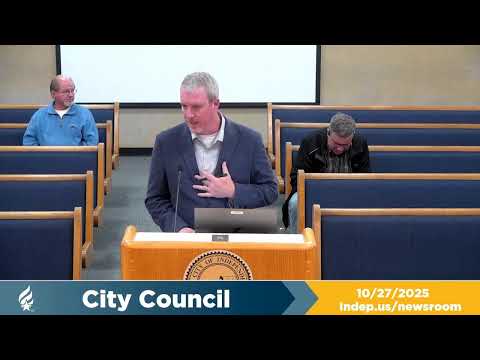
John Mayfield, the City of Independence’s external affairs and special events coordinator, presented the city’s proposed 2026 state legislative agenda to the Independence City Council and warned several pending ideas in Jefferson City could cost the city millions.
Mayfield told the council the packet — reviewed by city departments, the city manager’s office and the city’s lobby team — focuses on legislation that could "impact negatively the City of Independence from a financial and or public safety perspective." He said the 2026 General Assembly will meet January 7–May 15 and cautioned council members about bills already circulating.
Why it matters: Mayfield quantified the potential budget effect of one frequently discussed proposal. “If the sales tax on food were completely eliminated, it would be a $4,400,000 approximate hit to our general fund,” he said, adding additional annual losses of roughly $2.2 million to both street funds and fire protection and about $1.1 million to stormwater and parks based on 2024 figures. Those shortfalls would affect the city’s ability to fund public-safety services and infrastructure.
Major policy positions Mayfield outlined: - Community improvement districts (CIDs): The city opposes bills that would require a 70% council vote or a citywide election to approve a CID, noting the high cost of running elections (Mayfield estimated $100,000–$200,000 per election). - Local sales tax: The city opposes reductions, caps or elimination of local sales taxes without clear, compensating measures; Mayfield said any proposal paired with property‑tax relief would need detailed analysis before the council took a position. - Utility‑relocation mandates: The city opposes legislation that would require taxpayers to pay to relocate cable or streaming infrastructure placed in public rights‑of‑way, arguing most regulated utilities already build relocation costs into project budgets. - ARCH mental‑health funding: The city supports reinstating state funding for ARCH after a prior appropriation was vetoed. “Unfortunately for us, Governor Kehoe vetoed that line item,” Mayfield said; he added Representative Steinmeier has told staff he is willing to work on the issue again. - Municipal court enforcement: Mayfield urged restoring the ability of municipal court judges to suspend in‑state driver’s licenses for failure to appear, citing a fall in appearance rates from about 67% to roughly 15% since court reforms.
Council response and next steps: Council members asked that the chamber of commerce receive the document once the council adopts it and pressed staff on handling aging utility infrastructure in public rights‑of‑way. Mayfield said the city will coordinate with its lobby team, the Chamber of Commerce and the Missouri Municipal League and will report back to council when more concrete bills are filed. He offered to answer follow‑up questions by email or in person.
The council did not take a formal vote on the legislative agenda at the meeting; Mayfield’s presentation closed with a promise to monitor pre‑filing beginning December 1 and to return with updates as bills emerge.