
Committee hears bill to allow civil suits when responders or agents fail to render aid after shootings
Get AI-powered insights, summaries, and transcripts
Subscribe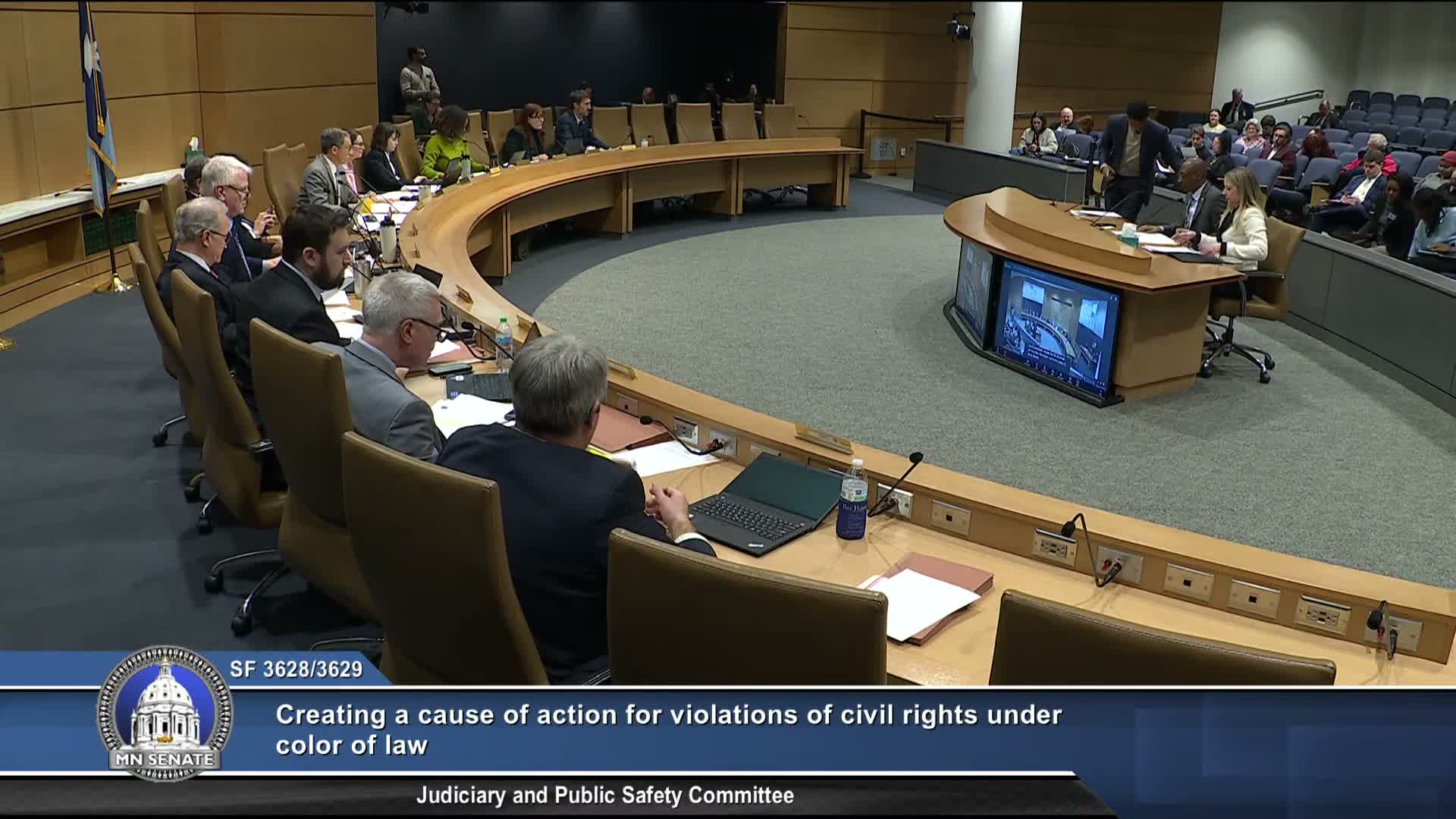
Summary
Senate File 36‑88 would create a civil cause of action when someone fails to render aid after a shooting; sponsors cited two recent deaths during federal operations and said the change would give families a civil remedy alongside criminal penalties.
Senate File 36‑88 would add a civil cause of action to Minnesota’s existing criminal duty‑to‑render‑aid statute, allowing victims or their families to seek damages when someone fails to provide reasonable aid after a shooting. Senator Sarah Murphy, chief author, told the Senate Judiciary and Public Safety Committee that she brings the bill because of the deaths of Renee Goode (Jan. 7) and Alex Preddy (Jan. 24) and reported instances in which bystanders and medical personnel were prevented from rendering care.
Murphy described the A2 authors’ amendment that sets an effective date allowing suits for incidents occurring on or after Dec. 1, 2025, and applies existing affirmative defenses from the criminal statute to the new civil cause of action. She said the bill is intended to provide a civil option in situations where criminal prosecution or federal investigation has been delayed or constrained.
Questions from senators focused on interaction with existing statutes (Minn. Stat. §609.662), how reasonableness will be judged, and whether adding a civil remedy would substantially increase litigation. Murphy said criminal prosecutions under the duty statute are relatively rare (a handful of convictions since 2021), that the civil standard mirrors current reasonableness safeguards, and that the bill is designed to enable families to pursue justice when other mechanisms fall short.
Committee action: SF36‑88 and its authors’ amendment were adopted for purposes of committee consideration and the bill was laid over.
Why it matters: The measure responds to community calls for accountability and seeks to create state‑court remedies when official responders fail to provide timely medical aid after use‑of‑force incidents. Debate centered on balancing victims’ rights to remedies with concerns about litigation expansion and clarity of civil standards.
What’s next: Committee will consider the measure in subsequent hearings; supporters and critics requested further technical drafting and clarification on interplay with established criminal law.