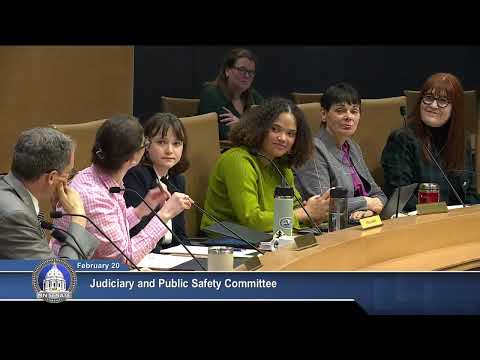
Senate committee hears lawmakers, advocates spar over state cause of action to sue federal officers
Loading...
Summary
Authors and supporters of SF 36‑28 told the Judiciary Committee the bill would create a state cause of action allowing Minnesotans to sue federal officers for constitutional violations; opponents warned it could hamper federal‑local partnerships and urged broader stakeholder engagement.
Senate File 36‑28 (identical to SF 36‑29) would establish a state civil cause of action allowing individuals to sue federal officers for violations of the U.S. Constitution or the Minnesota Constitution. Co‑chief authors Senator Fatai and Senator Champion presented the bill to the Senate Judiciary and Public Safety Committee on Feb. 20 and said it is intended to fill a perceived accountability gap following what members described as extensive federal immigration enforcement activity in Minnesota.
Senator Champion summarized the bill’s core provisions: it would create a civil remedy against any person “acting under color of any statute, ordinance, regulation, custom, or use of the United States or any state” who violates constitutional rights; courts could award damages, injunctive relief and reasonable attorney fees; and the statute of limitations would be six years. Subdivision language would also prohibit local agencies from entering partnerships with federal agencies unless the federal partner agrees in writing to abide by both U.S. and Minnesota constitutional standards.
Supporters who testified included the Institute for Justice, the ACLU of Minnesota, CARE Minnesota, and several community witnesses who described encounters with ICE agents including use of chemical irritants, detention of bystanders, and difficulty locating detained people. “A right without a remedy is not much of a right at all,” Megan Forbes of the Institute for Justice told senators.
Opponents and cautious members raised concerns. Committee members read a letter from the Minnesota Sheriff’s Association warning that the bill “will likely destroy” certain federal‑state partnerships used to investigate fraud and violent crime. Senators asked whether the bill would disrupt task forces, create duplicative litigation, or be vulnerable to federal preemption challenges. Authors said they welcome stakeholder discussions and that the bill requires federal partners to agree in writing to constitutional compliance rather than categorically forbidding cooperation.
Committee action: the committee adopted a technical A1 authors’ amendment to align effective‑date drafting conventions and laid the bill over for further consideration; no final vote on the underlying statute was taken.
Why it matters: The measure seeks to change the legal remedies available to Minnesotans who claim constitutional injuries by federal actors; supporters call it necessary accountability, while critics say it may have unintended consequences for cooperative law‑enforcement operations.
What’s next: The committee signaled it will hold additional hearings and engage stakeholders — including law‑enforcement groups — before advancing the bill.