Policy expert tells Judiciary Committee federal supremacy limits state action but leaves room for state accountability
Loading...
Summary
Migration Policy Institute fellow Muzeraaf Chishti told the Senate Judiciary and Public Safety Committee that the supremacy clause preempts conflicting state immigration laws, but states retain regulatory space and can craft remedies — an argument lawmakers said frames several bills under consideration.
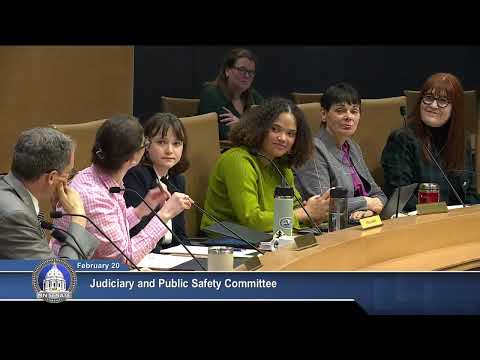
Muzeraaf Chishti, a senior fellow at the Migration Policy Institute and director of MPI’s office at NYU School of Law, told the Senate Judiciary and Public Safety Committee on Feb. 20 that while federal law preempts state laws in areas of direct conflict, there remains room for states to act on immigration‑adjacent matters and to protect public safety.
“The Supreme Clause is essentially a constitutional provision which says that all federal law preempts all conflicting state laws,” Chishti said in remote testimony. He added that the federal government has exclusive authority to decide who is admitted to or removed from the United States, but that “there is some space where state laws may operate,” citing occupational‑licensing and other regulatory examples.
Chishti described the legal mechanics that typically trigger ICE detainers — fingerprint matches to federal databases — and emphasized that detainers are generally treated as requests, not binding orders: “Detainers are just requests. They’re not binding on the local jurisdiction,” he said. He also noted that habeas corpus petitions have become a frequent tool for lawyers challenging protracted or arguably unlawful federal detentions.
Committee members pressed Chishti on whether federal agents must obtain judicial warrants to enter homes and whether citizens can be detained without cause. He responded that arrests or entries into homes generally require judicial process under the Fourth Amendment and that federal agents have no authority to arrest U.S. citizens without lawful cause.
Chishti also described litigation trends affecting plaintiffs’ ability to sue federal officers directly in federal court (the narrowing of Bivens remedies) and observed that several states have enacted or are considering state‑level statutes creating private causes of action to vindicate constitutional harms caused by federal officials.
Why it matters: Chishti’s testimony framed the committee’s bills — including proposals to allow state‑court suits against federal officers and to create state remedies for alleged failures to render aid — by stressing constitutional limits while outlining legal pathways states might use to pursue accountability. Members from both parties said the testimony informed concerns about federal‑state cooperation, civil‑rights remedies, and Fourth Amendment constraints.
What’s next: The committee continued to consider multiple bills on Feb. 20; Chishti answered senators’ follow‑up questions and the record shows lawmakers debating statutory language and stakeholder outreach on related proposals.