
Greenwich officials say preschool demand far exceeds spots; lottery filled 85 of ~225 applicants
Get AI-powered insights, summaries, and transcripts
Subscribe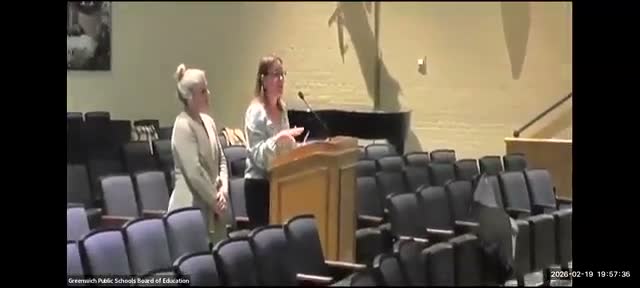
Summary
District special-education leadership told the board the preschool lottery filled about 85 spots from roughly 225 applicants, leaving over 100 families on the waiting list; district maintains a 6:9 special-needs-to-typical-peers ratio and plans a 19th classroom at Parkway this fall.
Greenwich Public Schools officials told the Board of Education on Feb. 23 that preschool demand greatly exceeds available spots. Katie Natal, preschool coordinator, said the district ran a lottery this year with roughly 225 applicants for about 85 openings and that more than 100 families remained on a waiting list.
Dr. Stacy Heiligenthaler, chief officer for special education and student supports, said the district is legally required to provide preschool special-education services beginning at the student's third birthday and to include typical peers in classrooms. Current classroom composition aims for six special-education students and nine typical peers. The district reported expanding to 18 preschool classes and plans to open a 19th classroom at Parkway in the fall to meet demand and space changes tied to renovations.
Board members asked for comparisons to neighboring towns and for clarity on tuition and ratios; Dr. Heiligenthaler said Greenwich's share of special-education identification is on par or slightly below Fairfield County averages and that many districts struggle to find typical peers, operating at lower peer ratios. She noted a recent change in state legislation extending the developmental-delay category to age 9, which may increase student retention in special education.
Administrators said they are monitoring facility utilization and may consider options such as off-site rental centers if in-district space becomes insufficient, though leaders cautioned centers often fill and longtime practice shifts services back to elementary schools.
The board requested additional comparative data on ratios and tuition for neighboring districts and asked the administration to include these details in future budget materials.