Gates County advances water upgrades, pilots reverse-osmosis treatment and pursues new wells
Loading...
Summary
County staff told commissioners they've launched a reverse-osmosis pilot, will advertise multiple water transmission and school pump-station projects for competitive bids (pre-bid March 12), and are pursuing permits and funding—including SRF and USDA options—to repair wells and address fluoride levels. Commissioners were asked to authorize staff to seek state reallocation of roughly $284,912 to keep an emergency well project moving.
Gates County officials told the Board of Commissioners on Thursday they are pressing ahead with a package of water and wastewater upgrades aimed at improving supply reliability and reducing fluoride levels in the county's public systems.
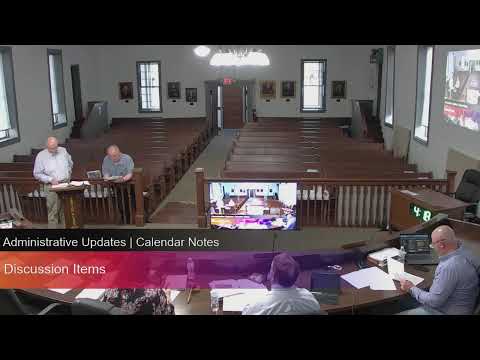
County Manager Scott Sauer opened the briefing with a PowerPoint showing a recently installed reverse-osmosis pilot train and two additional trains expected to arrive soon. "We launched the pilot testing for the reverse osmosis a few weeks ago," Sauer said, adding that weekly analyses will inform a final recommendation on treatment technology.
Leah, a project staffer, said the county has four line and transmission projects advertised and set the first water-transmission bid date for Thursday, March 12, with a non-mandatory pre-bid conference to be held locally. "If we come here Thursday''and there's less than three bids to open, we will not open any of the bids," Leah told commissioners, explaining the county would re-advertise and follow the state's authority-to-award process.
Staff recommended bidders provide required documentation (bonds, insurance, minority-solicitation paperwork) and said construction could begin as early as late spring or early summer if permits and awards proceed on schedule.
Engineers also updated the board on school pump-station and force-main projects that are permitted and expected to run through the Clean Water State Revolving Fund (SRF) process. Leah recommended keeping those projects separate for accounting reasons but coordinating bid schedules to bring multiple approvals to the Local Government Commission together.
In response to a recent well failure, staff reported they have submitted an engineering report and are pursuing an emergency well and new supply sources with assistance from consultant Dr. Spruill. "We appealed to the regional health engineer''and we said we need some help, you know, we're in a water crisis now," an engineer told the board; staff said they expect a plan-approval letter soon and estimated about 60 days to plan-and-spec approval before advertising bids.
The briefing included technical analysis from the county's hydraulic model and an asset inventory that flagged inaccessible or damaged valves and other maintenance priorities. Staff said they launched a pilot study of three treatment technologies about two weeks ago and will compare performance, recurring costs and permitting implications (including MPDES permitting if backwash disposal is required).
Staff asked the board to consider a motion later in the evening to request the state de-obligate approximately $284,912 from a completed park-campground sewer integration project and reallocate the funds toward rehabilitation and engineering for Well 2A. Staff estimates engineering at roughly $150,000 per well and a conservative drilling/installation estimate in the $180,000'$200,000 range.
What happens next: commissioners asked staff to prepare the LGC packet, continue weekly pilot analyses, and bring a motion to amend the meeting agenda at 6 p.m. to consider reallocation of SL1-34 funds and formal engagement with Green Engineering and Dr. Spruill.