Get AI Briefings, Transcripts & Alerts on Local & National Government Meetings — Forever.
Southington Board approves two-phase master facilities plan; first referendum set for June 2026
Loading...
Summary
After hours of public comment, the Southington Board of Education voted 8–1 on Feb. 19 to adopt a two-phase master facilities plan (scenario D2) that would build a new Kelly Elementary and expand South End in phase 1 and proposes a future phase 2 to rebuild Daronofsky and add a Karen Smith Academy; district and state reimbursement estimates and a June referendum were discussed.
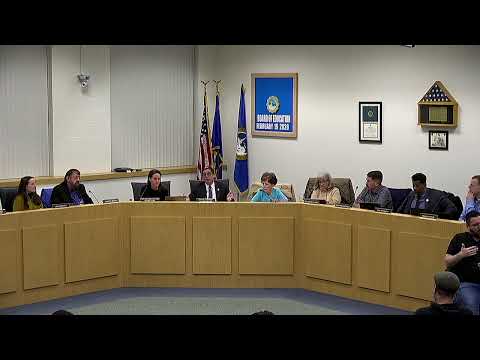
The Southington Board of Education voted 8–1 on Feb. 19 to adopt a districtwide master facilities plan that would move forward with a phased building program aimed at modernizing three of the district’s oldest elementary schools.
Pat Gallagher of MP Planning Group summarized the multi-year process behind the recommendation, saying the committee sought a balance between instructional needs, site constraints and fiscally responsible outcomes. "We looked at a lot of different data," Gallagher said, urging that scenario D2—selected by the facilities committee—best meets the district’s goal of operating schools in the 85–90% utilization range while addressing aging facilities.
Nut graf: The board’s approved plan calls for a June 2026 referendum for phase 1—construction of a new Kelly Elementary School (expanded to four sections per grade) and an interior expansion at South End—followed later by a possible phase 2 referendum to replace Daronofsky and build a new Karen Smith Academy. Supporters said the phased approach maximizes state reimbursement and avoids ad-hoc emergency repairs; opponents warned closing Flanders Elementary would harm neighborhood schools and community ties.
Colliers Project Leaders provided updated costs and a tentative schedule. Chuck Warrington said phase 1’s total budget is projected at just under $90 million, with Kelly’s portion about $82 million. The current published state reimbursement rate is 50%; recent legislation tied to early childhood care could add up to 15 percentage points, potentially bringing the rate to 65% for projects that qualify. Warrington noted those higher reimbursement points are not guaranteed and that the district share estimates reflect current assumptions: "We're proposing the data we have as of right now," he said.
Board members and dozens of residents spent more than an hour debating the plan’s trade-offs. Parents and grandparents opposing the closure of a neighborhood school said larger schools can weaken student belonging, increase class sizes, and complicate special education delivery. Kimberly Charcolo, a parent, warned consolidations can make students "become just students" without the close connections of neighborhood schools. Multiple speakers asked for fuller transparency on feasibility studies, updated cost assumptions and architectural drawings.
Other residents urged the board to act while favorable reimbursement rules and grant opportunities exist. Megan Neely, who said she favors rebuilding Kelly, argued delaying the work would increase emergent maintenance costs and leave aging buildings in reactive repair cycles. "If we don't move forward with a phased plan, the town will inevitably face major repairs to all three of the older buildings," she said.
Board members emphasized the plan was the product of several years of committee work, site analysis and enrollment forecasting. Several members called the decision difficult but necessary to secure state grant reimbursement and to right-size district capacity. One board member cited the potential cost of adding additional buses if more students were transported rather than neighborhood schools being used, and others urged commitments to preserve open space or community uses at any closed school site.
The motion adopted by the board states: phase 1—seek a 2026 spring referendum for construction of a larger Kelly Elementary and lower-level fit-out at South End; upon completion of those projects, Flanders Elementary would close and the district would redistrict remaining elementary schools. Phase 2 would be a future referendum for a new Daronofsky and a Karen Smith Academy on that site.
The board called the roll after debate; the motion passed 8–1. Next steps identified by presenters included preparing the state grant application (deadline indicated as June 30 in the presentation), further design work should the referendum pass, and an anticipated multi-year schedule for design and construction that would push occupancy toward 2029–2030 under current estimates.
The board did not finalize a use for the Flanders site; members suggested open-space designation, a community center, or other municipal uses as possibilities to be decided later. The plan and accompanying documents will move to the town council and board of finance for the referendum process.