Get Full Government Meeting Transcripts, Videos, & Alerts Forever!
Get email alerts on the Rezoning Lee Summit topic
No spam. Unsubscribe anytime.
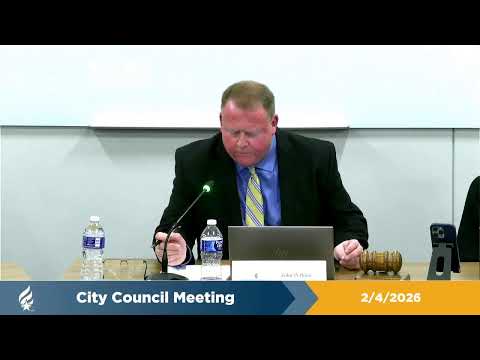
Council amends rezoning to require 55+ deed restriction, then postpones final vote for South Lee Summit Road development
Summary
Councilmen added a deed restriction limiting occupancy to persons 55 and older under HOPA to a rezoning for 123 units at 2610–2612 S. Lee Summit Road, then voted to postpone second reading two weeks so planning can consider additional buffering and berms.
The Independence City Council on Feb. 4 amended a rezoning ordinance for property at 2610 and 2612 South Lee Summit Road to include deed restrictions limiting occupancy to persons 55 and older, then postponed the ordinance's second reading for two weeks to allow planning to address neighborhood buffering and berm concerns.
Councilman Fierce moved the amendment to record deed restrictions ensuring compliance with the Housing for Older Persons Act (HOPA) and referenced applicable federal and state regulations; the motion was seconded and carried by roll call. Fierce said the deed restriction "may alleviate some of the concerns" neighbors raised about future uses and maintenance.
Staff and the applicant described the proposal as an age‑restricted multifamily planned unit development (PUD) of 123 units, noting the majority of units (about 83 of 123) include garages. Assistant community development director Rick Roy told council that a protest petition was reviewed and found to be 25.7 percent — below the 30 percent threshold needed to trigger additional statutory consequences. Roy also said planning commission discussions had proposed additional vegetation but that the plan before council did not contain extra buffers beyond the arterial berm required along Lee's Summit Road.
Councilwoman McCandless moved to postpone the second reading for two weeks so planning could return with options — including berms, fences, or increased vegetation — to better separate the new development from adjacent single‑family neighborhoods; the motion passed by roll call and the item was rescheduled for Feb. 16.
Why it matters: The amendment attempts to preserve a 55+ occupancy limit through recorded restrictions, a legal mechanism that survives a change of ownership if recorded as a deed restriction. Neighbors worried about traffic, noise, parking and long‑term maintenance; council members framed the rezoning as a preferable alternative to potential four‑story commercial development that could otherwise be built under current zoning.
What’s next: Planning staff will revisit buffering and lot layout at the applicant's request and report back at the rescheduled second reading on Feb. 16. The council did not adopt final rezoning on Feb. 4.