Get Full Government Meeting Transcripts, Videos, & Alerts Forever!
Get email alerts on the Fire Staffing And Tax topic
No spam. Unsubscribe anytime.
Montgomery Township board authorizes advertisement of 2026 budget and fire-tax ordinance amid resident calls for independent study
Summary
The board voted to advertise the proposed 2026 budget (including a plan to add 11 firefighters) and to advertise an ordinance creating a separate fire tax line totaling 1.71 mills; residents urged an independent staffing and facilities study and raised concerns about shifting numbers and transparency.
Montgomery Township’s Board of Supervisors voted to authorize advertisement of the proposed 2026 budget — which includes a plan to hire 11 additional firefighters — and separately authorized advertising an ordinance to establish a dedicated fire tax that would initially appear as 1.71 mills on real-estate tax bills.
The actions, taken during a public meeting, set both the budget and the proposed ordinance out for public inspection and notice ahead of later adoption votes. Township staff said the 1.71-mill figure represents the new 1.15-mill increase together with the existing 0.56 mills internally allocated to fire protection.
Why it matters: The staffing proposal would shift the department toward four platoons with more career coverage and would be paid for in part by the new fire tax. Residents and some supervisors said the decisions and the advertised millage are consequential because they would create recurring tax obligations and long-term personnel commitments.
Residents ask for a pause and independent study
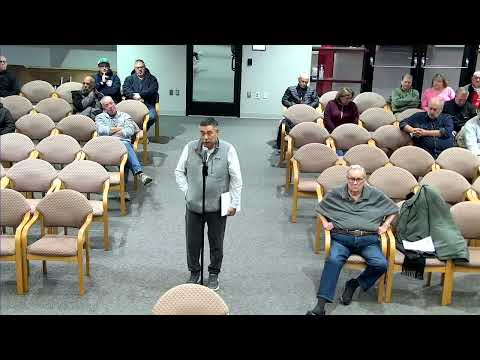
Several residents and the supervisor-elect, Eric Pelletier, urged the board not to proceed without a third-party, independent staffing and facilities study. Reading a prepared statement, Pelletier said internal analyses have “changed numerous times” and that a permanent expansion based on inconsistent data would be “not defensible.” He asked the board to table the staffing proposal until the next budget cycle and commission an objective assessment that “evaluates current and projected needs, compares regional models, examines facility requirements, and provides a clear rationale for any long term staffing recommendations.”
Other public commenters echoed those concerns. One resident said the staffing numbers had “bounced all over the place” — noting scenarios of 19, 7 and 11 hires at different times — and said materials explaining overtime, equipment costs and the specifics of the 11-person plan were not available on the township website.
Staff, chief outline the staffing rationale
Township staff and the fire chief described the 11-hire plan as the number required to staff four shifts with four firefighters per shift (the chief said the target was roughly 4 minutes 35 seconds average response time under that model). The chief and staff said the staffing analysis drew on comparisons with other municipalities and internal workload data; staff also cautioned the board that the municipal budget must be adopted by law before year-end and noted the legal deadline for finalizing a budget.
Board members split on timing and millage level
Several supervisors voiced support for establishing a dedicated fire tax and for taking steps to secure staffing and mental-health supports for firefighters. At least one supervisor said she supported the concept of a dedicated fire tax but would not back any increase above 1 mill without independent validation; she said she would vote "no" on a higher millage and asked that a portion of any increase be reserved for capital needs.
The board conducted voice votes to authorize advertisement of the proposed 2026 budget and to advertise the ordinance creating a fire-tax line item. Multiple supervisors said they favored the idea of a fire tax but explicitly disagreed with the 1.71-mill starting figure; the chair confirmed the motions to advertise carried and the board proceeded to the next agenda item.
What’s next
Advertising the budget and ordinance starts the formal public notice process: the materials will be available for public inspection, and the board may adopt or amend the proposals at a future meeting. Several supervisors reiterated they reserve the right to reopen and revise the budget in January, and residents asked that the township post clearer scenario documentation, cost breakdowns and the full staff analysis online so voters and taxpayers can review the underlying assumptions before adoption.
Quotes
"Ensuring that our residents are protected is a fundamental responsibility of local government, and I fully support taking steps that genuinely strengthen the safety and well-being of this community," said Eric Pelletier, reading a statement he submitted as supervisor-elect. "However, I'm deeply concerned about the process by which this proposal to increase full time firefighting staff has been advanced."
"This decision would not be defensible," Pelletier added, urging a comprehensive independent staffing and facility study.
"This ordinance would show up as a separate item on resident owned property owner's tax bills," township staff explained when describing how the fire tax would be presented to taxpayers.
The meeting record shows the advertisements were authorized; specific final adoption, millage setting and any amendments will depend on later hearings and any budget revisions the board chooses to make.