Get Full Government Meeting Transcripts, Videos, & Alerts Forever!
Get email alerts on the Fire Department Staffing topic
No spam. Unsubscribe anytime.
Montgomery Township officials propose adding full-time firefighters, citing volunteer shortage and slower weekend response times
Summary
Fire Chief Bill Wegman and Township Manager Carolyn McCreery presented a plan to add career firefighters and move to a 24-on/72-off schedule to improve response times and safety; officials said the change would require a tax increase and a feasibility study will examine station needs.
Fire Chief Bill Wegman on Monday outlined a proposal to expand the Montgomery Township Fire Department’s career staffing, saying the change is needed because volunteer numbers have declined and response times during volunteer hours lag significantly behind career-staffed periods.
"The proposal I put together asked for 6 firefighters on a platoon, a battalion chief, a captain, and 4 firefighters," Fire Chief Bill Wegman said, explaining his recommendation that the township move to a 24-on/72-off schedule to ensure a consistent incident commander and crew structure.
Chief Wegman and Township Manager Carolyn McCreery said department data show a stark difference in average response times: career crews reach scenes in about 4½ minutes while volunteer-response averages on weekends and some weeknights are near 10–11 minutes. Wegman cited National Fire Protection Association (NFPA) guidance on response benchmarks and the rapid growth of fires — "fire doubles in size every 30 seconds" — to argue the staffing change is a public-safety necessity.
McCreery said the township commissioned the staffing analysis at the board’s request and will publish detailed spreadsheets showing neighborhood-level tax impacts. She said a one-time tax increase would be required to fund the hires and startup costs.
The chief and manager described the proposal as a combination model that preserves volunteers while reducing reliance on them for nights and weekends. Wegman said the plan would preserve volunteer roles for training and trucks requiring specialty certifications, and that new apparatus already on order would support the model.
Officials said they plan a feasibility study to determine whether station renovations or a consolidated public-safety campus would be required; McCreery said the study could also identify grant opportunities for modest building changes. Wegman noted the department already operates five personnel sleeping in the station nightly and that apparatus replacement typically follows a 15–25 year cycle.
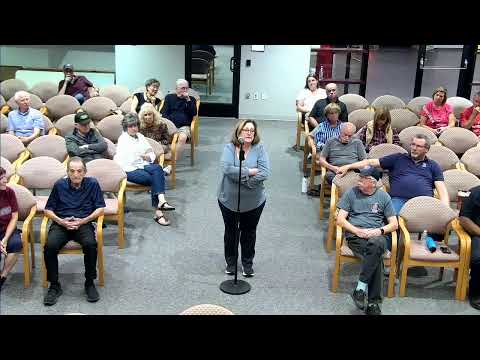
Resident reaction was mixed but included strong support from volunteers and some neighbors who said the money would be well spent. Several residents pressed for alternate schedules, phasing options and public comparators; Wegman and McCreery said an alternate 24/48 scenario, cost spreadsheets and benchmarks have been or will be posted to the township website for public review.
The board of supervisors will decide whether to act on Wegman’s recommendation after reviewing the feasibility study and the financial detail that McCreery said the township will publish.