Get Full Government Meeting Transcripts, Videos, & Alerts Forever!
Get email alerts on the Fire Budget Study topic
No spam. Unsubscribe anytime.
Montgomery Township reopens 2026 budget, trims new fire tax and hires independent fire-services consultant
Summary
Facing public concern over response times and a projected budget shortfall, the Montgomery Township Board voted to reopen the 2026 budget, reduce a recently adopted fire tax to a total of 1.00 mills, and contract the Center for Public Safety Management to perform a comprehensive fire services study.
Montgomery Township’s Board of Supervisors voted Jan. 5 to reopen the 2026 budget, scale back a recently adopted fire tax and hire an independent consulting firm to evaluate fire services and staffing.
The board authorized reopening the budget and directed staff to return amended figures at the next meeting. The board also voted to amend the fire tax ordinance so the township’s total fire tax would be 1.00 mill (reducing the 1.71-mill level adopted in December), reallocating roughly 0.44 mills for fire staffing, 0.45 mills to capital reserves and 0.11 mills to the general fund for other pressures.
Why it matters: Residents, volunteer and career firefighters pressed the board to address what they described as growing response-time gaps and declining volunteerism. Several speakers said the staffing proposal adopted last year lacked independent review; the board’s actions set a path to revisit assumptions and funding while seeking community input and external analysis.
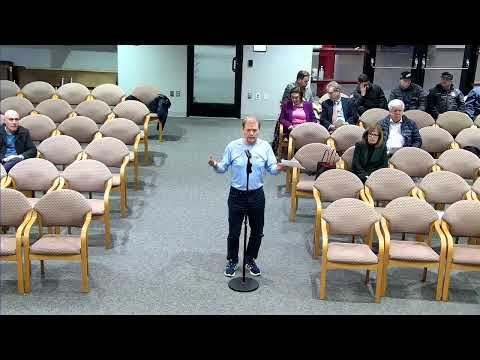
Public safety testimony and community response Anthony, a Montgomery Township firefighter who read a statement on behalf of local professional firefighters, told the board that response performance has deteriorated and urged immediate action. “It took a Montgomery Township fire truck 12 minutes and 51 seconds to arrive on scene,” he said, citing a recent gas‑odor incident at a nursing home and asking what the board’s plan would be to address increased response times.
Resident Annette Long said some supervisors lacked the “financial and accounting expertise” to balance fiscal responsibility with safety needs and urged the board to prioritize fire staffing even if it requires a tax increase.
Board debate and the revised tax proposal Township staff and several supervisors discussed options to fund staffing and capital needs without adopting the full 1.15-mill increase previously proposed solely for fire protection. The board’s direction was to model a 1.00-mill overall increase and show scenarios for how that revenue would translate into hires and capital allocations; staff said they will present numbers at the Jan. 26 meeting and follow the public-advertising timeline for an amended budget and ordinance prior to a February adoption deadline.
Consultant selection and scope The board reviewed three proposals and, by majority vote, appointed the Center for Public Safety Management (CPSM) to conduct a comprehensive fire services study. Staff summarized proposals received: Espirit Consulting Group (phase pricing in the mid‑teens to ~$25,000 for an initial staffing phase), Municipal Resources Inc. (management letter or full study priced from approximately $25,000 to $45,000 plus expenses), and CPSM (a full study proposal at $47,560). The CPSM engagement was described as a full fire services study with an estimated completion time in the proposal of about six months, though supervisors and residents asked staff to request an expedited “staffing-first” assessment at the project outset so the township would have immediate data on critical staffing shortfalls.
Next steps Staff will prepare amended budget figures for the Jan. 26 meeting, advertise the amended budget, and target final adoption timelines consistent with statutory notice requirements. The consultant agreement will be executed by the township manager and the study will inform future staffing, capital and policy decisions; any implementation would require separate board votes.
The board’s vote tonight authorizes both the budget reopening and the consultant engagement but does not commit the board to implement any specific staffing recommendation until the study and follow-up discussions are complete.