
District reports 78.4% of ninth-graders 'on track'; staff outline targeted interventions
Get AI-powered insights, summaries, and transcripts
Subscribe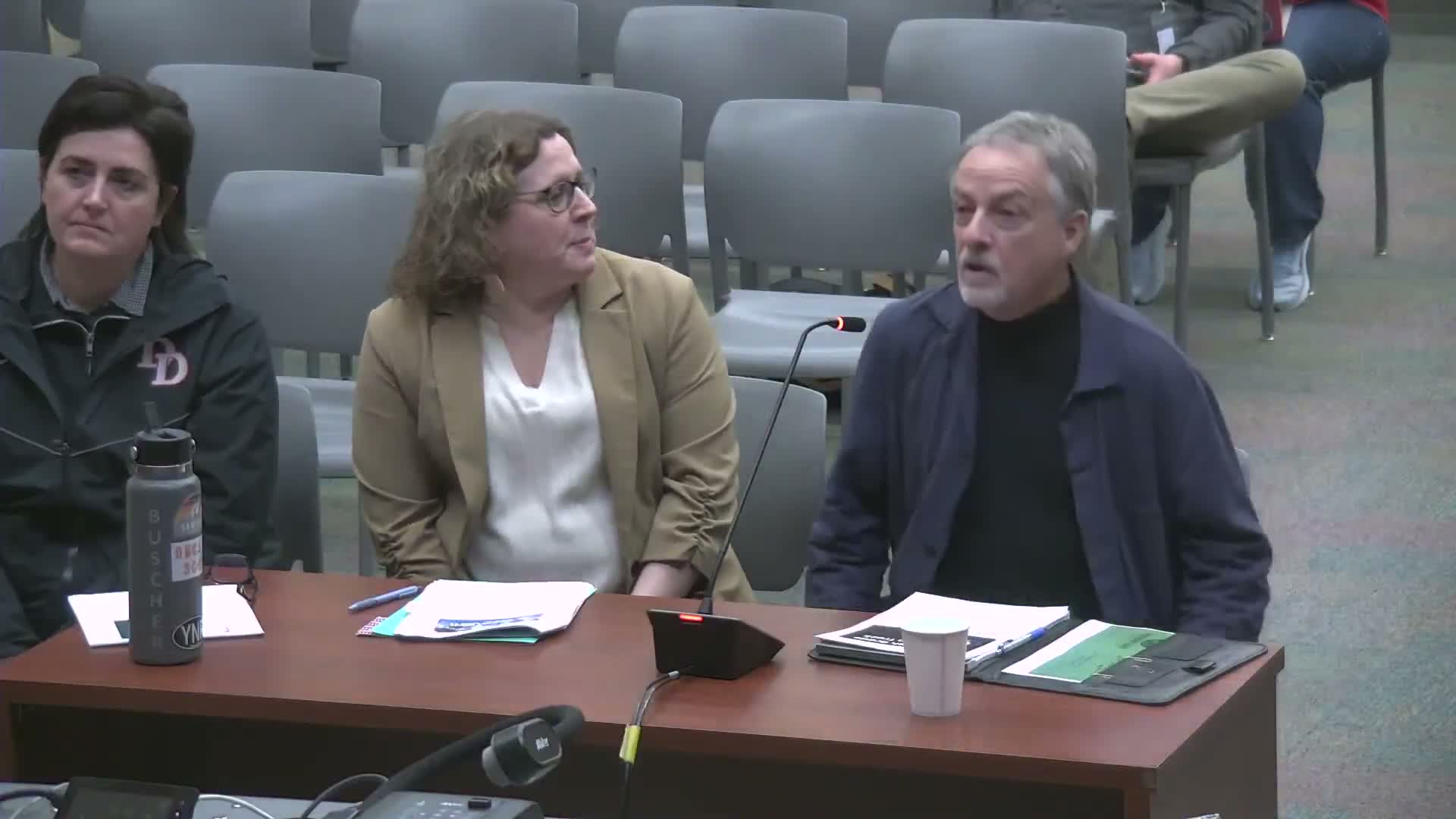
Summary
District data show 78.4% of ninth-graders met the state "on-track" credit threshold last year, with large disparities at the online academy; school leaders described house-based teams, strategy teachers, and plans for semester credit recovery to improve outcomes.
The David Douglas School District presented a data-focused update on Dec. 11 showing that 78.4% of ninth-graders met the state’s "ninth-grade on-track" measure last year, a figure district presenters said had fallen during COVID and is now recovering but still lags some peers.
In the presentation, staff noted the online academy’s ninth-grade students had markedly lower outcomes: about 23% met the 6-credit threshold there, compared with roughly 80% at the main high school campus. The district cautioned that some small subgroup numbers can be volatile and that the on-track measure is intended as an early indicator for interventions.
Assistant Principal Angie Ortiz McNees and Principal Jennifer Buscher outlined an implementation strategy centered on a house model: four teams (about 130–150 students each) with a core teacher set (English, science, health, math), an assigned counselor, and a case manager for students with IEPs. Each house includes strategy teachers to focus on skills such as organization and self-advocacy.
Presenters emphasized the importance of earning six or more credits in ninth grade: historically, students who earned six credits were far more likely to graduate (graduation rates for that group ranged roughly 90%–98% in stable cohorts), while students who did not typically faced much lower graduation prospects (around 60% in some cohorts). Math was identified as the largest single barrier to earning those credits.
To address failures midyear, the district said it is exploring in-person semester credit recovery classes, targeted interventions at semester, expanded credit-recovery options outside of summer school and data-driven interventions through house teams so students are supported earlier rather than waiting until summer.
Board members asked follow-up questions about progressive grading rollout and whether credit recovery would be online or in person; staff said the preference is in person if feasible. The board identified timing issues for a full graduation-rate presentation because state data are embargoed in January and suggested moving that report to February or March when more finalized data are available.
The district did not adopt a new policy at the meeting but presented a set of near-term strategies for staff to pursue and return with outcomes in future presentations.