Get Full Government Meeting Transcripts, Videos, & Alerts Forever!
Get email alerts on the Fire Department Staffing topic
No spam. Unsubscribe anytime.
Montgomery Township considers hiring 19 full‑time firefighters to ensure 24/7 coverage as weekend response slips toward 10 minutes
Summary
Officials presented a plan to add 19 full‑time firefighters and move to a 24/7 combination department after volunteers’ weekend response averaged nearly 10 minutes; board members asked staff to include the numbers in the 2026 proposed budget and to hold public outreach before a final vote.
Montgomery Township officials on an agenda item about fire services moved to place staffing estimates for a proposed transition to a 24/7 combination/career fire department into the 2026 proposed budget, after staff and volunteers described increasing gaps in weekend coverage and slower response times.
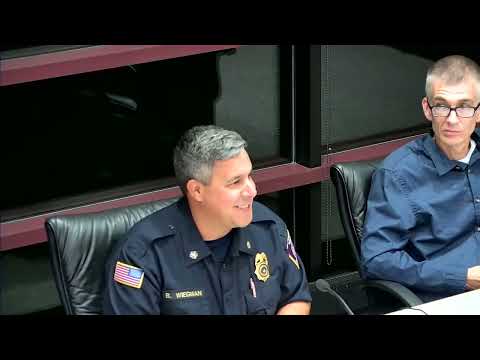
Chief Leibman, the township’s fire chief, told the board the volunteer system is producing “a service gap” and presented arrival‑time data showing that in 2025 a volunteer engine’s on‑scene arrival averaged "9 minutes and 49 seconds," up from 8:36 in 2023. He said those times are “unacceptable” for the community and argued that full‑time staffing would reduce response times toward the roughly 4–5 minutes the department’s career shifts currently achieve.
The chief and staff outlined a plan to hire 19 full‑time employees to operate four 24‑hour platoons on a 24/72 schedule so the township can routinely place four firefighters on a first‑out truck plus an incident commander. "If we do this right...we should be there in 4 minutes to 5 minutes," the chief said when describing expected response improvements; he also warned that longer delays increase the risk of flashover and structural collapse.
Board members questioned whether the hires could be phased in to reduce immediate tax impact and administrative strain. A board member said a phased approach would give more time for facilities planning and ease HR and IT workloads, while others warned that partial hiring might fail to deliver the crew integrity and timing the chief described. One member summarized the tradeoff: phasing eases short‑term costs; hiring all 19 at once restores the full standard of operations more quickly.
Residents and volunteers who spoke during public comment supported action but pressed for clear public information on cost. Volunteer leaders described broad recruitment and retention pressures: Vinay Sethi, a volunteer with 20 years' service, said volunteers are increasingly burned out and that recruitment is harder as housing costs and demographics change. Volunteer Adam Swazlowski recounted an event when small volunteer crews were insufficient and said 24/7 coverage is "ideal...as soon as possible." Resident Eric Pelletier told the board he had seen a 38% tax‑increase estimate in the materials and urged simple, transparent outreach on who would be affected.
Staff said they had prepared cost estimates based on the chief’s staffing recommendation (six firefighters per shift in order to maintain four on a truck plus command) and the current collective bargaining agreement; they also said benefit costs were calculated from present premiums and projected increases. The board was told three quotes had been obtained for a facilities feasibility study that could be included in a later capital plan and that staff would bring a facilities recommendation to the board in 2027 if the staffing change proceeds.
No formal vote was taken. Board members signaled consensus that the township should move toward 24/7 coverage as a long‑term goal but directed staff to pursue a public information campaign, bring back phased and full‑hire cost scenarios, and include the staffing numbers in budget documents for the 2026 budget cycle so elected officials can consider financial impacts before a final decision.
Next steps: staff will prepare outreach materials and run informational sessions for homeowners associations and community centers, return detailed cost and phasing analyses that include overtime and HR capacity impacts, and present budget figures to the board in September for inclusion in the 2026 proposed budget.