Get Full Government Meeting Transcripts, Videos, & Alerts Forever!
Get email alerts on the Board Compensation topic
No spam. Unsubscribe anytime.
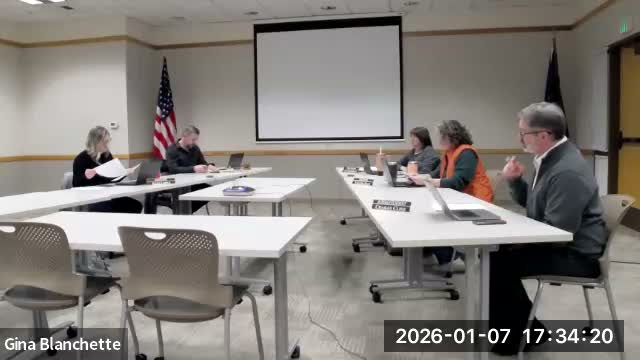
Redmond SD 2J pulls stipend policy from consent agenda, plans fuller review and January vote
Summary
Board members discussed a stipend and reimbursement policy mistakenly placed on the consent agenda, legal and ethical questions about declaring conflicts, a 2023 statute capping stipends at $500 per month, and unclear guidance from OSBA and the Oregon Government Ethics Commission; the board agreed to discuss and return the policy for a January vote.
Speaker 4, a board member, told colleagues she removed a stipend and reimbursement policy from the consent agenda because it “needs actual board discussion and decision making.” She told the meeting that if the board does vote on a stipend it must be accompanied by conflict‑of‑interest declarations.
Why it matters: The discussion touches on potential personal benefit to sitting board members and statutory and ethics constraints. Speaker 4 cited a 2023 statute capping stipends at $500 per month, saying the cap is indexed to a regional CPI; Speaker 4 also noted a Portland school board figure of $576 as a public reference. “The statute which was passed 2023, capped it at 500 per month,” Speaker 4 said.
What the board discussed: Members asked whether the stipend could be budgeted but not immediately paid, whether individuals could opt out, and whether the stipend would affect eligibility or create ethical exposures. Speaker 5 read language in the draft about payroll mechanics: “Board members will be getting a $10.99 put on payroll,” Speaker 5 read aloud and asked whether that would be treated as salary. Board members said they would clarify tax/treatment with staff and that any individual could refuse the stipend.
Next steps: The policy will be revised as needed and brought back for discussion and a formal vote in January. Staff were instructed to follow up with legal counsel (Lauren was referenced) and the Oregon Government Ethics Commission and to provide clarifications on cross‑referenced district policies and budget treatment.
Quotes: “This policy should not have gone through the consent agenda because it needs actual board discussion and decision making,” Speaker 4 said.
Ending: The board did not vote on the policy at the work session; members asked staff to correct references, confirm legal guidance, and present a revised policy for a future public vote.