Get Full Government Meeting Transcripts, Videos, & Alerts Forever!
Get email alerts on the Homelessness Policy topic
No spam. Unsubscribe anytime.
State rep outlines three bills aimed at safe entranceways, bus stops and waterways
Summary
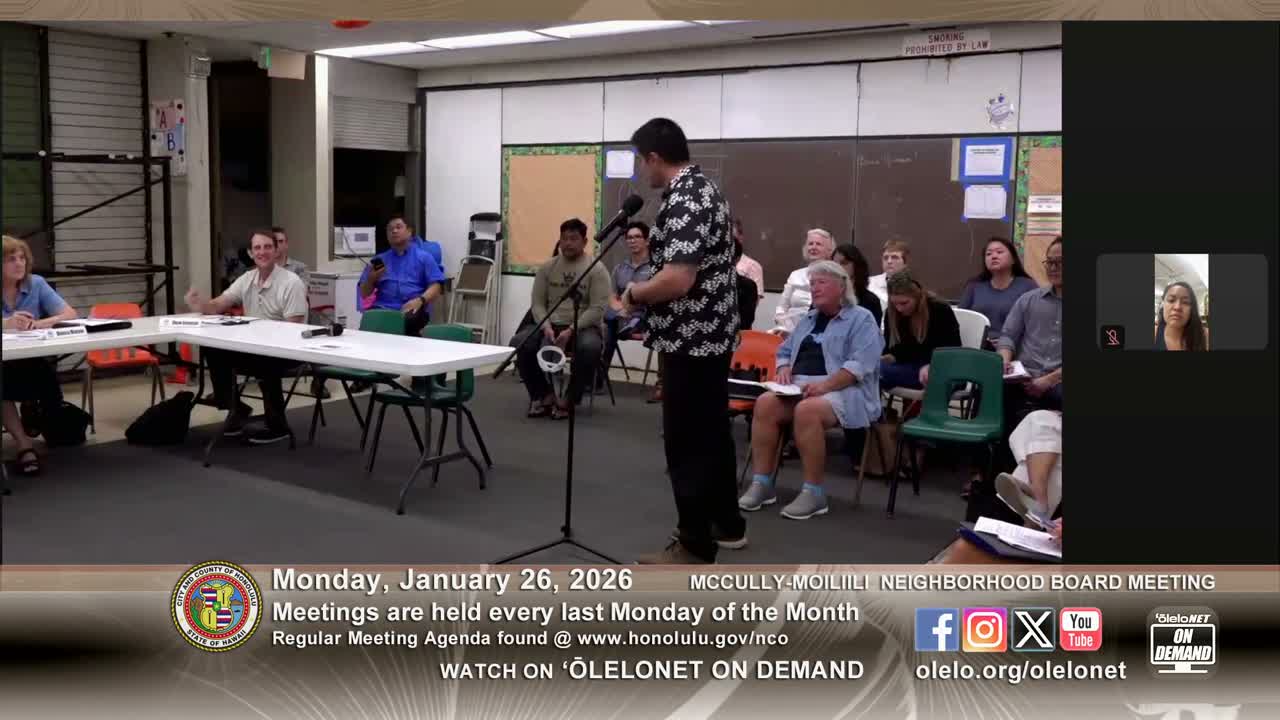
Representative Olds detailed three statute bills that would create protective 'bubbles' around doorways and bus stops and prohibit storing personal property near fresh waterways (HB 1956); he emphasized tiered enforcement with warnings, citations, and potential sweeps while saying the intent is not to criminalize homelessness and supportive services should accompany enforcement.
Representative Olds presented three statute bills intended to address safety and public‑space access: a safe‑entranceways bill creating a 10‑foot buffer around doorways, a safe‑bus‑stops bill creating a 20‑foot buffer and a tiered enforcement approach, and HB 1956, described as prohibiting domiciling or storing personal property near freshwater waterways to reduce pollution and risks to the ocean.
Olds said the bills are written as statute changes without direct city funding and are intended to include progressive enforcement (initial warning, then citation, and only after repeated noncompliance, sanitation and sweep procedures). “We’re not trying to criminalize homelessness,” he said, but added that residents and kupuna need safe, accessible bus stops and doorways.
At the meeting, board members and community members expressed concerns about displacement and whether citation‑based approaches work in practice. Olds acknowledged evidence that fines often fail to resolve the underlying issues and said his approach seeks balance and coordination with supportive services and federal/state funding programs. He noted the point‑in‑time survey would inform outreach and that the bills are largely statutory rather than appropriations.
The proposals are at the informational stage; if filed as bills they will proceed through legislative committees. Board members urged careful attention to where people are displaced and to couple statutory enforcement with housing and service investments.