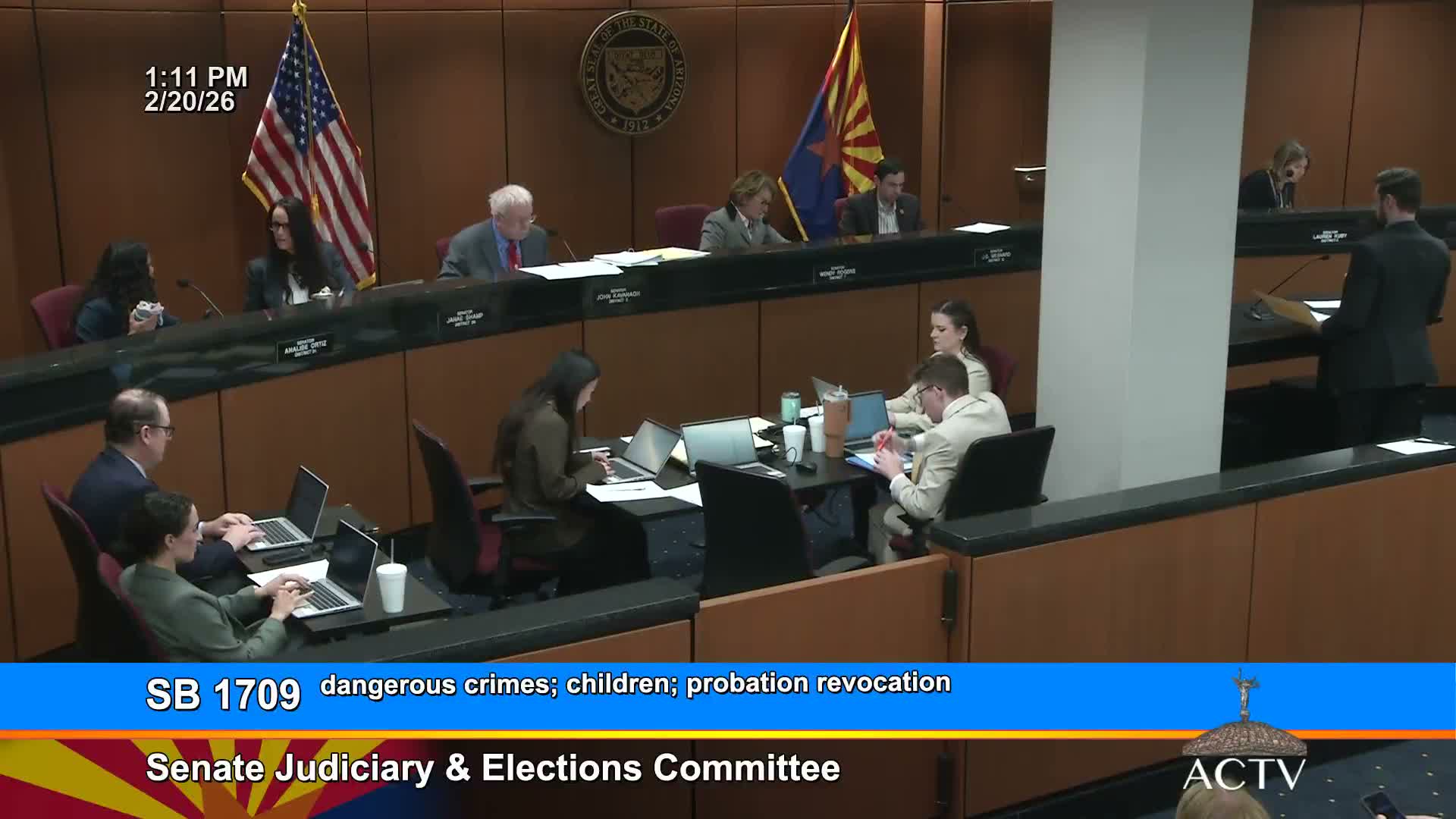
Committee advances two bills tightening probation for Dangerous Crimes Against Children after emotional testimony
Loading...
Summary
The committee gave due‑pass recommendations to SB1709, which mandates rearrest and probation revocation for adults convicted of dangerous crimes against children who violate probation or reoffend, and SB1829, which would bar early termination of lifetime probation for most DCAC convictions; supporters cited victim re‑traumatization, while family members and defense witnesses warned removal of judicial discretion could sweep in vulnerable or neurodivergent defendants.
Lawmakers on the Senate Judiciary and Elections Committee advanced SB1709 and SB1829, two measures aimed at increasing accountability for people convicted of Dangerous Crimes Against Children (DCAC).
SB1709 would require judges to issue a warrant for rearrest and revoke probation when an adult previously convicted of a DCAC commits an additional offense or violates conditions of probation; it also provides that concurrent probationary terms must run consecutively upon revocation. Sponsor supporters said stronger, mandatory consequences are needed to protect victims and avoid repeat petitions that re‑traumatize survivors.
SB1829 would prohibit courts from terminating lifetime probation earlier than originally imposed for DCAC convictions (with an exception if a defendant was under 18 at the time of the offense), applying to some people currently on lifetime probation. Sponsor witnesses described cases of repeat petitions to end supervision that forced victims to repeatedly relive abuse.
Opponents including family members and people currently serving sentences urged caution: they said prosecutorial charging choices, plea bargains and the digital grooming context can funnel young or neurodivergent people into DCAC classifications; family witnesses described plea deals that resulted in lengthy supervision and urged preserving judicial discretion and mechanisms for individualized review. The committee advanced both measures with due‑pass recommendations after emotional testimony and careful debate.