
Panel advances bill to restore guardian ad litem authority in some juvenile proceedings
Get AI-powered insights, summaries, and transcripts
Subscribe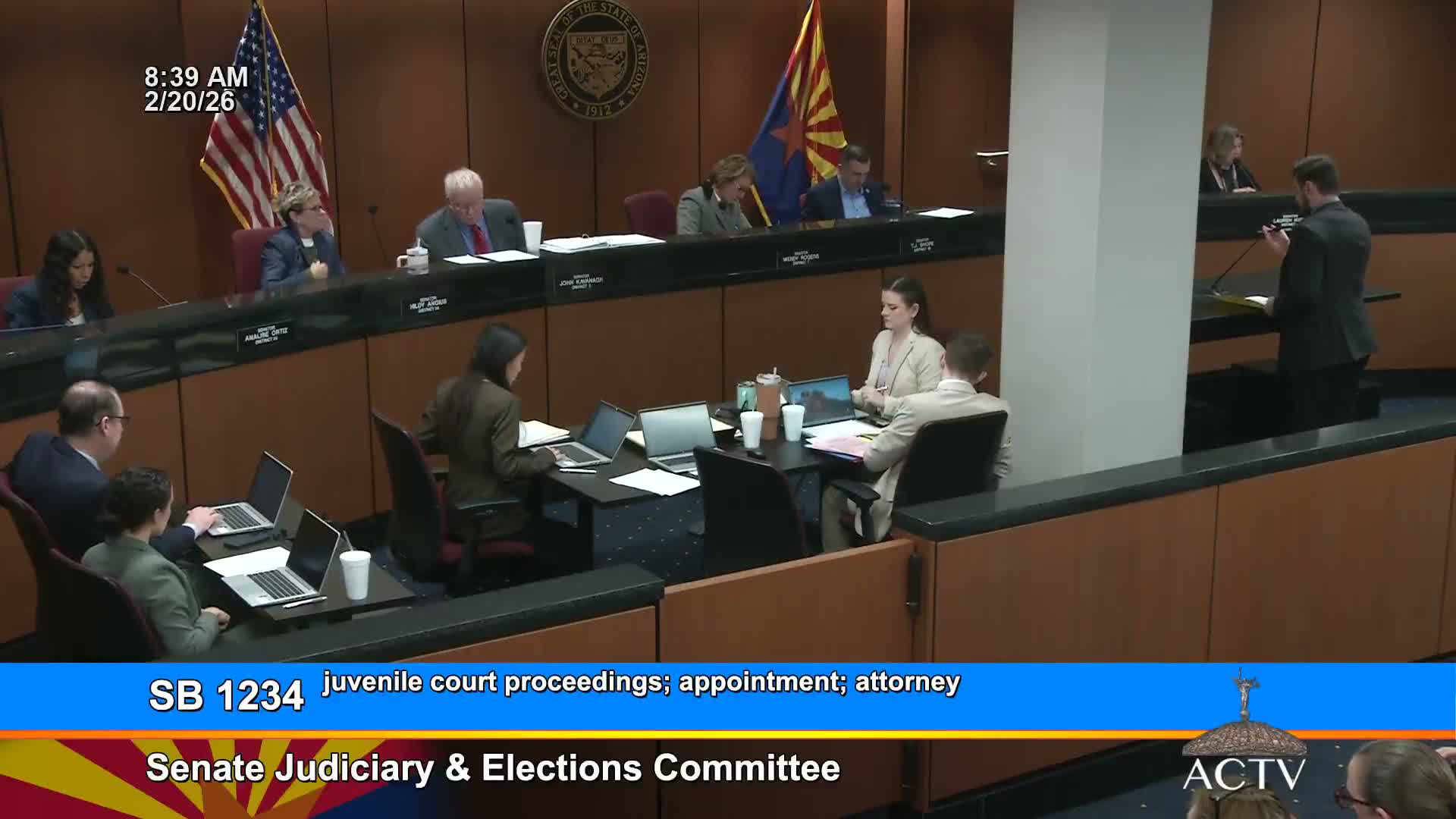
Summary
SB1234 would require appointment of a guardian ad litem and clarify that a child's attorney must also look to the child's best interest in dependency and termination proceedings; proponents cited cases where different representation might have changed outcomes, while defenders of the current attorney model warned about losing confidentiality and advocacy.
Senator Karen Warner told the Judiciary and Elections Committee she introduced SB1234 after stakeholder meetings with county attorneys, the Department of Child Safety and tribal partners, and said "if these changes had been done, these children would still be alive," referencing high‑profile child‑welfare cases.
The measure requires the court to appoint a guardian ad litem in dependency and termination proceedings and authorizes an attorney for the child depending on age and the child's ability to express preferences. Warner said the change restores a practice she saw as a CASA volunteer and argued it would allow an advocate focused on the child's best interest to take action, including filing proceedings where appropriate.
Opponents including attorneys and advocates for children argued the current system grants attorneys confidentiality and a duty of loyalty that lets children disclose concerns privately. Tim Keller of the Center for the Rights of Abused Children described repeated examples in foster care where children never heard from their GAL and urged the committee to vote no. Other witnesses, including the Department of Child Safety, indicated the bill was developed in response to case review findings but acknowledged areas of language for clarification.
The committee adopted a Rogers amendment, heard extensive testimony from legal and child‑welfare professionals, and issued a due‑pass recommendation.