Get Full Government Meeting Transcripts, Videos, & Alerts Forever!
Get email alerts on the Airport Operations topic
No spam. Unsubscribe anytime.
Council approves amendment letting Kill Devil Aviation land helicopters on adjacent private site
Summary
The Seward City Council approved an amendment allowing Kill Devil Aviation to land Blackhawk helicopters on private property adjacent to Seward Airport, subject to landowner permission and FAA requirements; planning staff said operations would be limited to a few monthly takeoffs and landings and coordinated via the airport's common traffic advisory frequency.
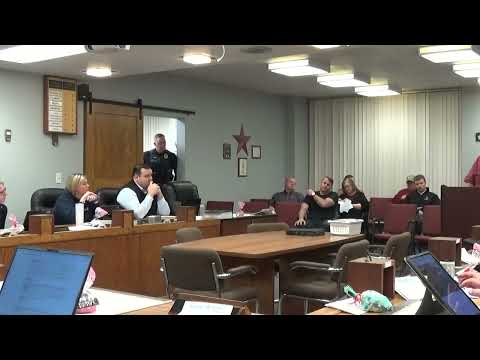
The Seward City Council on the night approved an amendment to a special-use permit for Kill Devil Aviation to allow on-site landings of Blackhawk helicopters at 1253 200 Eighieth Road in the C-2 district. The council and staff said the change is intended to avoid towing aircraft across public roads and to reduce traffic disruption.
Greg Whistler, airport manager for the Seward Airport, told the council the airport operates in uncontrolled Class G airspace and that pilots use a common traffic advisory frequency (CTAF) to announce positions and intentions. "We use CTAF so airplanes can communicate even though they're not talking to a controller," Whistler said, explaining that pilots would announce their intent to land adjacent to the airport property.
A representative for Kill Devil Aviation and a private operator, Steve of Peel Double Aviation, spoke during public comment in favor of the amendment, saying pilot professionalism and a low number of landings would limit risk. "All the pilots that'll be flying for me are professional pilots. We don't want to be in a crash any more than a Cessna does," Steve said, adding that property-owner permission was being arranged.
Planning staff told the council the planning commission recommended the amendment after estimating roughly four to eight takeoffs or landings per month from the private site. Staff also recommended attaching a copy of the landowner's permission to the special-use permit when filed so the city record documents that consent.
The council moved to approve the permit amendment; the clerk recorded roll-call votes in favor and the motion carried. Council and staff reiterated that airspace regulation remains under FAA authority and that the city's role is limited to land use and permitting on the ground.
The amendment does not change FAA requirements or airspace controls; it establishes local land-use permission to allow landing and takeoff activity on the named private property. The council did not attach additional operational limits beyond the landowner-permission requirement discussed in the packet and at the hearing.