Get Full Government Meeting Transcripts, Videos, & Alerts Forever!
Get email alerts on the Restraint Seclusion topic
No spam. Unsubscribe anytime.
State Board hears rise in reported seclusion after state law broadened definition
Summary
A Department of Education presenter told the State Board that seclusion counts rose in 2024 after Senate Bill 179 expanded the legal definition; board members asked for clearer narratives and child-level metrics to prevent misinterpretation of public data.
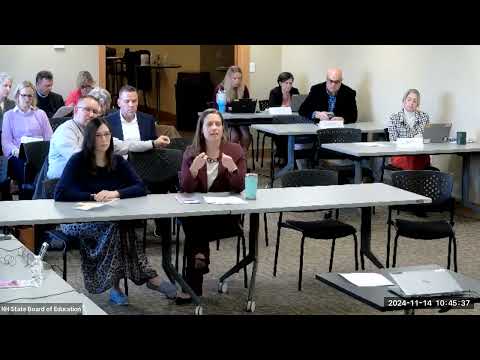
A Department of Education presenter reviewed the state—s latest restraint, seclusion and bullying data on Nov. 14, saying changes in state law explain much of an apparent rise in seclusion incidents.
The presenter said the 2024 report shows restraint incidents roughly steady but seclusions rose to 1,654 from 730 the previous year. "Seclusions went up because the definition of seclusion went up," the presenter said, summarizing how Senate Bill 179 made the seclusion definition more inclusive and brought more incidents under the reporting requirement.
The department told the board that every reporting entity this year—public schools, charter schools and nonpublic schools—filed reports, and that seven educator-misconduct complaints were referred to the Department, with one resignation, one law-enforcement referral, one staff member placed on administrative leave and four cases deemed unfounded.
Board members pressed staff on how to make the published data less misleading without changing the statutory counts. "If someone only looks at the document it looks like, 'oh my god, what's going on in Berlin?'" said Speaker 6, urging that the department include narratives in reports to explain policy or definitional changes that can produce spikes.
Members also asked for child-level metrics to show whether high counts reflect many children affected or repeated incidents involving a small number of students. Department staff said they follow up with schools as needed and can add clarifying notes and additional breakdowns where feasible.
The presentation framed the shift in counts as a reporting and definitional effect rather than a demonstrable increase in harmful practice, and the department highlighted that reported incidents this year produced no student injuries and that cameras in common areas had been important in corroborating staff actions.
The board had no final vote on policy at the meeting but directed staff to consider how to incorporate short explanatory narratives and whether additional disaggregation (instances per child) can be included in future statewide reports.